
Summary
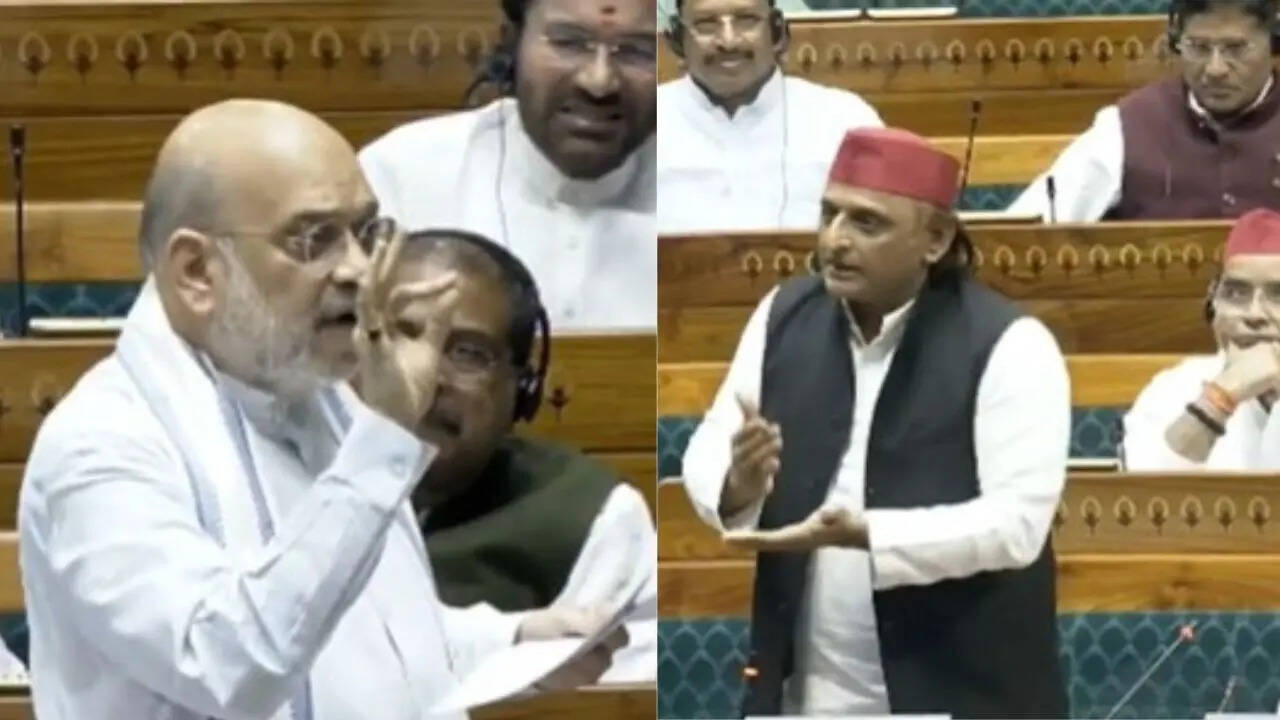
Union Home Minister Amit Shah recently proposed a one-hour pause in parliamentary proceedings to discuss the Delimitation Bill with opposition leaders. This suggestion was made to resolve disagreements over how voting boundaries are redrawn across the country. However, the proposal was met with a sharp response from Samajwadi Party leader Akhilesh Yadav, who shifted the focus toward the leadership of the country. The exchange highlights the deep political divide over the timing and implementation of new election rules and women's representation in government.
Main Impact
The main impact of this political clash is the continued uncertainty surrounding the implementation of the Women’s Reservation Act. Although the law to reserve one-third of seats for women in the Lok Sabha and state assemblies has been passed, it is tied to the process of delimitation. Delimitation is the act of redrawing the boundaries of elective constituencies based on the latest population data. Because the government and the opposition cannot agree on the steps for this process, the actual start of women's reservation remains delayed. This disagreement affects how future elections will be organized and which regions might gain or lose political influence.
Key Details
What Happened
During a heated debate in the Lok Sabha, Home Minister Amit Shah offered to stop the formal session for sixty minutes. He suggested that leaders from all parties sit together in a private room to discuss the technical details of the Delimitation Bill. Shah argued that the government wants to move forward fairly and that a private talk could clear up confusion. He stated that the government is following the legal path to ensure that the census and the redrawing of boundaries happen correctly before the reservation for women takes effect.
In response, Akhilesh Yadav, the leader of the Samajwadi Party, did not accept the offer as a simple procedural step. Instead, he used the moment to make a political point about gender and power. He questioned the government's intentions and remarked that if the government were truly serious about women's empowerment, the country should see a woman Prime Minister. This comment was seen as a direct challenge to the current leadership and a way to move the conversation away from the government's proposed timeline.
Important Numbers and Facts
The debate centers on several key figures and legal requirements. The Women’s Reservation Bill, officially known as the Nari Shakti Vandan Adhiniyam, promises 33% of seats to women. However, this can only happen after two major events: a national census and a delimitation exercise. The national census was originally supposed to happen in 2021 but was delayed. Current estimates suggest that the redrawing of seats might not happen until after 2026. This means the actual change in how many women sit in Parliament might not occur until the 2029 general elections or even later.
Background and Context
To understand why this matters, it is important to know what delimitation does. Every few years, the government looks at the population in different parts of the country. If one area has many more people than another, the boundaries of the voting districts are changed so that every Member of Parliament represents roughly the same number of citizens. This is meant to keep elections fair. However, it is a sensitive topic because states that have successfully controlled their population growth fear they might lose seats, while states with fast-growing populations might gain more power.
The opposition parties are worried that the government might use the delimitation process to favor certain regions. They also argue that the government is using the census and delimitation as excuses to delay giving women their reserved seats. They want the reservation to start immediately, without waiting for the maps to be redrawn. The government, on the other hand, insists that doing it without a fresh census would be unconstitutional and lead to legal problems.
Public or Industry Reaction
Political experts and observers have noted that Amit Shah’s offer to halt proceedings was an unusual move. It showed a willingness to negotiate, but it also put the opposition in a difficult spot. If they refused to talk, they could be blamed for the delay. By responding with a comment about a woman Prime Minister, Akhilesh Yadav attempted to reclaim the narrative. Supporters of the opposition praised Yadav for his bold stance, while supporters of the government criticized him for avoiding a serious discussion on policy and law.
Women's rights groups have expressed mixed feelings. While they are happy that the reservation law exists, many are frustrated by the long wait. They see the constant arguing between the government and the opposition as a sign that political power is still being prioritized over actual progress for women in leadership roles.
What This Means Going Forward
Looking ahead, the path to redrawing election boundaries will remain difficult. The government must first conduct the national census, which is a massive task involving every household in India. Only after that data is collected can the Delimitation Commission begin its work. This process will likely involve many more debates in Parliament and possibly legal challenges in the courts. The relationship between the government and the opposition will continue to be tested as they try to agree on a fair way to distribute political power across the country's diverse regions.
Final Take
The clash between Amit Shah and Akhilesh Yadav is more than just a disagreement over a meeting. It represents a fundamental struggle over the future of Indian democracy. While the government focuses on the legal and procedural steps required by the Constitution, the opposition is pushing for faster social changes. Both sides agree that women should have a larger role in politics, but they are far from agreeing on the map that will get them there. Until a middle ground is found, the promise of 33% reservation remains a goal for the future rather than a reality for today.
Frequently Asked Questions
What is the Delimitation Bill?
The Delimitation Bill is a plan to redraw the boundaries of voting districts in India. This is done to make sure that each elected official represents a similar number of people based on the latest census data.
Why is women's reservation linked to delimitation?
The government decided that the 33% reservation for women can only be applied once the new voting boundaries are set. This ensures that the reserved seats are distributed fairly based on the most recent population numbers.
When will the new voting boundaries be ready?
The process cannot start until the next national census is completed. It is expected that the new boundaries and the women's reservation will likely come into effect for the national elections in 2029.



