
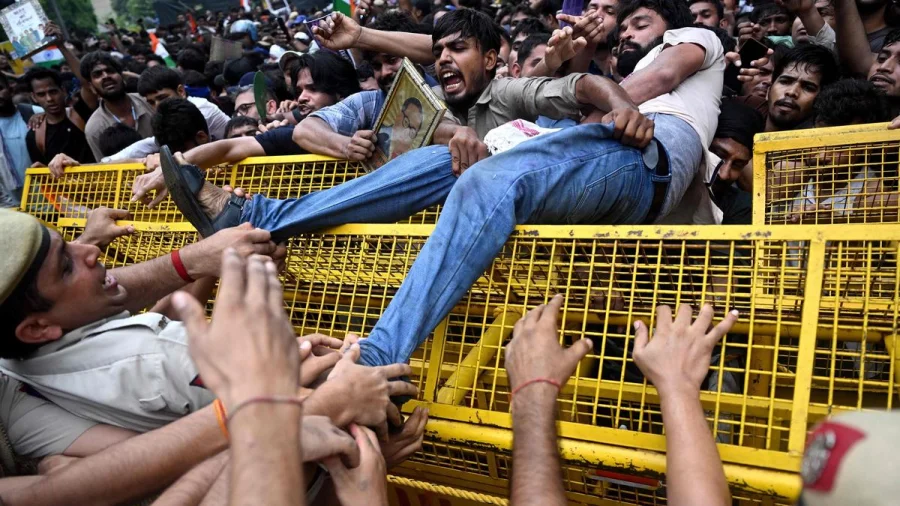
For many students, returning home from a Delhi protest should mean the end of it. Instead, some allege the opposite — police personnel knocking on their family's door, questioning parents and relatives, long after the demonstrations ended.
Students describe home visits and questioning across states
The allegations, as reported in the original story summary, describe a consistent pattern. Students who participated in past protests in Delhi say police have made repeated visits to their homes.
Parents and relatives were questioned across multiple states, including Tamil Nadu, Karnataka and Odisha. The students describe this as harassment that follows them beyond the city where the protest took place.
Why the allegations carry weight beyond individual cases
If true, this would mean participation in a protest in Delhi carries consequences that trail students to their home towns for months or years. Surveillance and intimidation, they allege, continue well after the public demonstration has ended.
For young people from other states — many of whom travel to Delhi to study or work — this raises a deeper question: whether exercising the right to protest puts their families at risk.
The reported pattern: visits, questioning, surveillance
According to the original story, three elements repeat across the student accounts. First, repeated home visits by police personnel. Second, questioning of parents and relatives. Third, surveillance and intimidation described as continuing for months and even years after the protests.
The summary notes coverage of at least three states — Tamil Nadu, Karnataka and Odisha — suggesting the practice is not confined to Delhi's immediate neighbourhood.
Who is affected: students, parents and families far from Delhi
The emotional weight of these allegations falls on families with no direct role in the protests. Parents who may not have known about their child's participation are reportedly questioned at home.
For the students themselves, the fear is not just about legal trouble — it is about the burden placed on relatives who had nothing to do with the demonstration.
What authorities have said so far
As of the source material available, no official response from Delhi Police or the state police forces in Tamil Nadu, Karnataka and Odisha has been included in the reporting.
That absence of a published response means the allegations remain one-sided — reported claims from students rather than confirmed findings.
What the allegations mean for protest rights
Protests in India's capital often draw participants from across the country. Students from southern and eastern states routinely travel to Delhi for major demonstrations.
If post-protest follow-up extends to their home districts, the practical cost of participation rises sharply — not just for the protester but for their entire family network.
Confirmed facts vs what remains unclear
Let's be precise about what is and isn't established. Confirmed in the source summary: students who participated in past Delhi protests allege repeated police home visits, family questioning, and long-running surveillance and intimidation, including in Tamil Nadu, Karnataka and Odisha.
Unclear: the specific incidents, dates, police units involved, and any official justification. No independent verification, police statement, or legal documentation has been made available in the source material. These are allegations — serious ones — but allegations nonetheless.
Concerns and the need for a balanced view
Police in India conduct routine inquiry visits in connection with registered cases, preventive measures, or law-and-order assessments. Without specific case details, it is not possible to determine whether the visits described fall inside or outside legal procedure.
At the same time, the consistency of the pattern described by students — across multiple states, months apart — raises legitimate concerns that deserve a formal response from the authorities.
A wider pattern of post-protest scrutiny
This story connects to a broader debate in India about how law enforcement follows up with protesters after demonstrations end. Questions about surveillance, interstate police coordination, and the chilling effect on future participation have been raised repeatedly in public discourse.
The allegations add a fresh layer: the geographical spread of post-protest follow-up across state lines.
What affected students and families should know
Students who face home visits or family questioning should document every interaction — dates, times, officer names and badge numbers, and the questions asked. This record matters if legal recourse becomes necessary.
Families who feel intimidated can approach their local police station with a written complaint, or seek legal aid through state legal services authorities under the Legal Services Authorities Act.
Where this could go next
The immediate next step would be a response from the police forces named in the allegations — clarification of whether such visits occurred and on what basis.
A formal reply, or the absence of one, will shape whether this stays an allegation or becomes a matter of public accountability.
Our Take
This story is, at this stage, an allegation — but it is a serious one that touches the core of how protest rights and police powers interact in a democracy. The detail that stands out is not the protest itself but the reported aftermath: visits that follow students home, and families drawn into a process they never chose.
The reporting so far is thin, and that is exactly why the burden now falls on the authorities to clarify their position. Until they do, students from Tamil Nadu, Karnataka, Odisha and elsewhere are left with an unanswered question: how far does participation in a Delhi protest follow them?
Frequently Asked Questions
What are Delhi students alleging about police harassment?
Students who participated in past protests in Delhi allege that police personnel have made repeated home visits, questioned their parents and relatives, and subjected them to surveillance and intimidation — continuing for months or even years after the demonstrations ended.
Which states are involved in these allegations?
The reported allegations cover home visits and family questioning across several Indian states, with Tamil Nadu, Karnataka and Odisha specifically named in the original story summary.
Why would police visit students' homes after protests?
Police in India may conduct follow-up inquiries in connection with registered cases or preventive measures. However, the students describe these visits as harassment. No official explanation has been published in the source material reviewed.
What should students do if police visit their home after a protest?
Students should record the date, time, officer identities and questions asked during any visit. If they believe the interaction crosses into harassment, they can file a written complaint at the local police station or seek help from a state legal services authority.



