
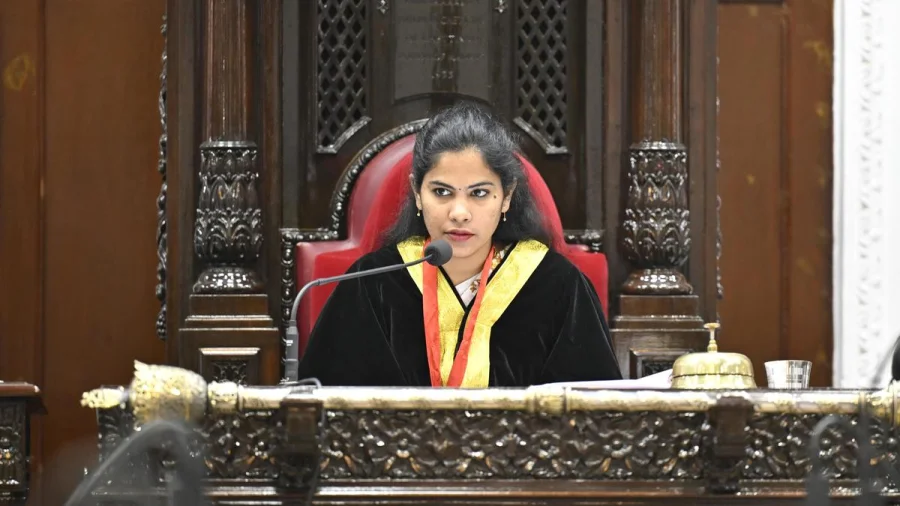
For nearly a year, Chennai Mayor R. Priya says she has been subjected to relentless online abuse through multiple social media accounts. On [date not confirmed in source material], she took the step that many public figures now feel forced to consider — walking into the police commissioner’s office with a list of accounts she says have been “continuously bullying” her.
Mayor submits list of accounts to police commissioner
R. Priya told reporters that she had submitted a detailed list of social media handles to Greater Chennai Police Commissioner A. Amalraj. The accounts, she alleged, have been engaged in sustained cyberbullying targeting her personally and professionally.
‘Continuous bullying’ — the nature of the harassment
While specific examples of the abuse have not been disclosed, the mayor described the campaign as “continuous” over the past year. Such harassment often includes misogynistic slurs, threats, and coordinated trolling — a pattern increasingly familiar to women in Indian politics.
Why this matters for Chennai residents and public officials
The complaint is not just about one person. It underscores the toxic environment that elected representatives — especially women — face online. If unchecked, such bullying can deter capable individuals from entering public service. For Chennai, the case also tests the capacity of local law enforcement to handle cybercrimes under the IT Act and Bharatiya Nyaya Sanhita.
Police response — what happens next
Commissioner Amalraj has received the complaint. The next step would typically involve verification of the list, identification of account holders (including VPN usage), and possible notice or FIR under relevant sections. No official statement from the police has been released yet.
Legal framework for cyberbullying in India
India’s IT Act (Section 67 for obscenity, Section 66A struck down, but newer provisions exist), along with criminal defamation (Section 356 BNS) and provisions for electronic harassment, can apply. However, enforcement remains inconsistent — especially when abusers hide behind anonymous accounts.
Confirmed facts vs what remains unclear
Confirmed: Mayor R. Priya submitted a complaint with a list of accounts to the police commissioner; she described the bullying as continuous for nearly a year. Unclear: Exact number of accounts, specific nature of posts, whether any accounts are linked to known individuals, and any timeline for investigation. This article does not speculate on those details.
Risks and balanced view
While the mayor’s action is a legitimate legal recourse, commenters on social media may raise questions about freedom of speech versus targeted harassment. Some may argue that criticism of public officials — even harsh — is not always bullying. However, “continuous bullying” implies persistent, personalised attacks that go beyond fair critique. The police must draw this line carefully.
Wider trend — rising cyber harassment of Indian politicians
Across India, politicians — particularly women and those from marginalised communities — have increasingly faced coordinated online abuse. Cases from Delhi, Maharashtra, and Karnataka have seen elected officials filing similar complaints. The Chennai case adds to this growing record of digital intimidation in public life.
Practical guidance for readers facing cyberbullying
If you are experiencing sustained online harassment, document everything — screenshots, URLs, timestamps. File a complaint on the National Cyber Crime Reporting Portal (cybercrime.gov.in) or visit your local police cyber cell. Do not delete messages. Block accounts, but preserve evidence before doing so.
Future outlook
The police investigation will be key. If the accounts are traced and action is taken, it could set a precedent for handling cyberbullying of public figures in Tamil Nadu. If the case stalls, it may further discourage victims from coming forward.
Our Take
Chennai Mayor R. Priya’s decision to formally complain is a necessary step in reclaiming a safe digital space for public life. But the real test lies in enforcement. Cyberbullying thrives on anonymity and inaction. For the message to reach abusers — and victims — the police must move swiftly and transparently. This story is small in detail but large in implication.
Frequently Asked Questions
What did Chennai Mayor R. Priya do about cyberbullying?
She submitted a formal complaint and a list of social media accounts to Greater Chennai Police Commissioner A. Amalraj, alleging continuous online bullying for nearly a year.
Which accounts were reported in the cyberbullying complaint?
The mayor submitted a list of accounts, but specific handles have not been made public as of now.
What legal action can be taken for cyberbullying in Chennai?
Depending on content, police may file an FIR under the IT Act (for electronic harassment) and relevant sections of the Bharatiya Nyaya Sanhita. Investigation can lead to notice to platform providers or arrest if identity is established.
How can I file a cyberbullying complaint in India?
You can register a complaint on the National Cyber Crime Reporting Portal (cybercrime.gov.in) or visit your local police cyber cell. Preserve all evidence — screenshots, URLs, time stamps.



