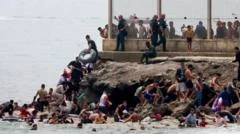
The crisis at Ceuta's border has forced its way into Brussels. With migrants entering the Spanish enclave in large numbers, the EU has summoned an emergency meeting — but the harder conversation is happening between Spain and Europe's other capitals, where patience and solidarity are pulling in opposite directions.
Why an Emergency Meeting Was Called Over Ceuta
The EU has called an emergency meeting to discuss the Ceuta migrant crossings, according to the original story. The immediate trigger is the influx of migrants into Ceuta, a Spanish territory on North Africa's coast that also forms part of the European Union's external border.
The fact that this is being handled at EU level rather than as a purely Spanish matter shows how quickly the situation escalated. Brussels is now formally engaged in what began as a border emergency and has become a political one.
A Small Enclave With an Outsized Role in Europe's Migration Debate
Ceuta is Spanish territory on the African mainland — a physical gateway where Europe and Africa are separated by fences and a short coastline. When migrants enter the enclave, they are stepping onto EU soil, and the legal and political consequences ripple far beyond Madrid.
That geography explains why the emergency meeting is about more than one border. The crossings touch on European rules on asylum, border security and the recurring question of which country takes responsibility when arrivals spike.
Tense Exchanges Between Spain and Other EU States
The original story records tense exchanges between Spain and other EU member states over the influx. Spain, as a front-line state, has pointed to the pressure of handling arrivals directly. Other capitals have raised concerns about border control, security and the risk of migrants moving onward across the bloc.
Those differences were already simmering before this crisis. The Ceuta crossings have turned a background disagreement into a public one, and the emergency meeting is now the forum where those divisions will have to be confronted.
The Human Reality Behind the Diplomatic Tension
Behind the statements and meeting rooms are people whose lives are directly shaped by the outcome. Migrants who reach Ceuta are often fleeing difficult conditions, and some become separated from family during the journey. Residents of the enclave, meanwhile, have had to cope with the disruptions that come with a sudden arrival of people at their border.
Whatever the emergency meeting produces, it will not immediately change their circumstances. But it could influence how quickly the situation stabilises and how people in these situations are treated in the days ahead.
What the EU Is Likely to Discuss
No detailed agenda has been officially published, so what follows is based on the reported situation rather than confirmed paperwork. The meeting is expected to centre on how to respond to the immediate arrivals in Ceuta, coordination with European border agencies, and the broader question of solidarity among member states.
The lack of public detail is itself notable. It suggests the talks are happening quickly, and possibly before positions have fully hardened — which could make the conversation more flexible, or more fragile.
Confirmed Facts vs What Remains Unclear
Confirmed by the story: The EU has called an emergency meeting on the Ceuta migrant crossings. The influx has caused tense exchanges between Spain and other EU states.
Unconfirmed: The exact number of migrants involved, the precise date and venue of the meeting, and any concrete measures on the table. No independent high-confidence sources were available at the time of writing, so these details should be treated as open questions, not settled facts.
Risks Behind the Push for a United Response
Emergency meetings can produce a show of unity, but the Ceuta case exposes genuine fault lines. Some EU states favour stricter border enforcement and faster returns; others insist on collective responsibility for people who arrive. Both positions carry risks: a harder line could put vulnerable migrants in harm's way, while a softer approach could face political backlash in member states already sceptical of immigration.
There is also the risk of Spain feeling abandoned. If the meeting ends with broad principles but no concrete support, the enclave's situation remains unchanged and the trust between Madrid and Brussels takes another hit.
What People Affected Should Do Now
For residents of Ceuta and migrants currently in the enclave, official guidance from Spanish authorities and the EU remains the most reliable reference point. Details on movement, safety and any support measures should come from those institutions, not from unverified social media posts.
For readers trying to follow the story, the advice is simple: treat unconfirmed numbers and dramatic claims with caution. The central facts at this stage are the emergency meeting itself and the diplomatic tension that triggered it.
What Happens After the Emergency Meeting
The immediate outcome could take several forms: a joint EU statement, additional funding or operational support for Spain, or a clearer framework for dealing with similar arrivals in the future. If no agreement is reached, the public disagreement between Spain and other member states is likely to deepen.
None of these outcomes is certain. The meeting's real test is whether the EU can move from principle to practice on a subject where member states have disagreed for years.
Our Take
Ceuta is one of the few places where Europe's southern border physically sits on African soil, and events there rapidly become a test of the EU's credibility. The emergency meeting matters beyond Spain because it forces the bloc to answer a question it has long avoided: who is responsible when migrants arrive through one member state's border?
The answer, whatever form it takes, will shape European migration policy well after the immediate crisis in Ceuta fades from the headlines.
Frequently Asked Questions
Why did the EU call an emergency meeting over Ceuta?
The EU called the emergency meeting in response to the influx of migrants crossing into the Spanish enclave of Ceuta, which triggered tense exchanges between Spain and other member states over how to handle the situation.
What is Ceuta and why does its border matter to the EU?
Ceuta is a Spanish territory on the North African coast and part of the EU's external border. Because migrants who enter Ceuta arrive on European soil, the crossings raise EU-wide questions about asylum rules, border security and burden-sharing among member states.
What are the disagreements between Spain and other EU countries?
Spain has highlighted its role as a front-line state handling arrivals, while other EU members have raised concerns about border control and how the migration burden should be distributed. These differences are at the centre of the tense exchanges noted in the original story.
What could come out of the EU emergency meeting?
Possible outcomes include a coordinated EU response, additional support for Spain, or clearer rules on responsibility for migrant arrivals. No specific measures have been confirmed, and the meeting's agenda and date have not been officially published.