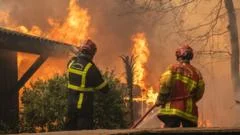
More than 300,000 people have been ordered to leave their homes as catastrophic wildfires tear through southwestern France and northern Spain, authorities confirmed on Wednesday. The mass evacuation — among the largest in Europe’s recent history — unfolded as flames advanced on residential suburbs of Bordeaux and across rural parts of Spain’s Aragon and Catalonia regions.
“Complex Hours”: Spain’s PM Issues Urgent Warning
Spain’s Prime Minister, speaking from the national emergency coordination centre, warned citizens to prepare for “complex hours” ahead. “This is not over. Firefighters and military units are facing extreme conditions,” he said. Local officials in Zaragoza reported that flames had jumped containment lines overnight, forcing the evacuation of an additional 20,000 people.
Bordeaux Blazes Still Raging, Says France
In France, officials described the situation near Bordeaux as “far from stabilised.” More than 1,500 firefighters supported by water-bombing aircraft have been battling three main fronts since last weekend. The Gironde prefecture said that although some progress had been made, wind shifts could quickly reverse gains. “We are in a race against time,” a senior fire service commander told local media.
Why So Many Were Forced to Flee
A combination of extreme summer heat exceeding 40°C, prolonged drought, and strong gusts created a perfect firestorm. In both countries, flames moved faster than ground crews could respond, forcing preemptive evacuations of entire towns. In Spain, the town of Fraga was emptied in just four hours overnight. In France, the villages of Hostens and Belin-Béliet saw residents leaving with only essentials.
Human Cost: Schools, Hospitals, and Lives Disrupted
Mass evacuation shelters have been set up in sports halls and community centres. Thousands of families, many carrying children and elderly relatives, spent the night in temporary accommodation. Hospitals in the affected zones moved patients inland. Farmers reported losing livestock and stored harvests. “Everything I built is gone. But we are alive,” said a vineyard owner near Saint-Magne.
Emergency Response: Firefighters on the Frontline
France deployed two Canadair water bombers and additional crews from other regions. Spain mobilised the Military Emergencies Unit (UME) to support overwhelmed local brigades. Eyewitnesses described giant walls of flame advancing over ridges, with embers igniting new spot fires kilometres ahead. French President expressed solidarity; EU activated the Civil Protection Mechanism to send reinforcements.
Climate Crisis in the Background
While no single wildfire can be directly attributed to climate change, scientists have long warned that rising global temperatures intensify drought and create conditions for larger, faster-moving fires. Southern Europe has experienced increasingly severe summer fire seasons over the past decade. This event, say meteorologists, fits that pattern.
Confirmed Facts vs What Remains Unclear
Confirmed: Over 300,000 evacuated across France and Spain; Bordeaux area fires not contained; Spain’s PM said “complex hours.” Unclear: Total area burned; number of homes destroyed; exact cause of ignition (likely human activity but under investigation). Any casualty figures reported must be treated with caution until official confirmation.
Wider Lessons for Europe’s Fire Preparedness
This disaster raises urgent questions about whether European nations are ready for mega-fires that overwhelm existing resources. Evacuation planning, firefighting fleet capacity, and early warning systems are under scrutiny. Experts argue that investment in preventive measures — such as forest management and fire breaks — remains underfunded relative to the growing risk.
Practical Guidance for Those Affected
Residents in evacuation zones should follow official orders without delay, pack emergency go-bags, and keep vehicles fuelled. Those returning to damaged areas must check for gas leaks and structural instability. Authorities advise staying tuned to local radio and government alerts. For those outside the immediate zone, avoid outdoor burning and keep emergency contacts handy.
What’s Next? Forecast and Outlook
Weather forecasts show slightly cooler temperatures expected in the next few days, but wind remains unpredictable. Fire behaviour modelling suggests that containment could take another week if winds remain moderate. However, if a new heatwave forms, the crisis could expand. Officials caution that more evacuations cannot be ruled out.
Our Take
This is not just a story about fire. It is a story about how fast life can turn upside down for hundreds of thousands of ordinary people. The coordinated evacuations saved lives, but the trauma, economic loss, and environmental damage will linger for years. As climate shifts make such events more common, the question is no longer whether Europe will face similar disasters — but how well it will be prepared when it does.
Frequently Asked Questions
Why were so many people evacuated from the France and Spain wildfires?
Fires spread rapidly due to extreme heat and strong winds, threatening residential areas. Authorities ordered mass evacuations preemptively to protect lives, especially near Bordeaux and in northern Spain.
How many people have been displaced by these wildfires?
More than 300,000 people have been evacuated from their homes across France and Spain. Thousands are staying in temporary shelters.
What help is being provided to evacuees?
Local governments have set up reception centres with food, water, and medical aid. France and Spain have deployed military emergency units and requested EU assistance.
What caused the wildfires in southern Europe this summer?
The immediate cause is under investigation, but a combination of drought, record heat above 40°C, and dry winds created explosive fire conditions. Human activities are often the spark.
How long will the fires take to control?
Officials say containment may take a week or more, depending on weather. Cooler temperatures may help, but shifting winds remain a major risk factor.