
Summary
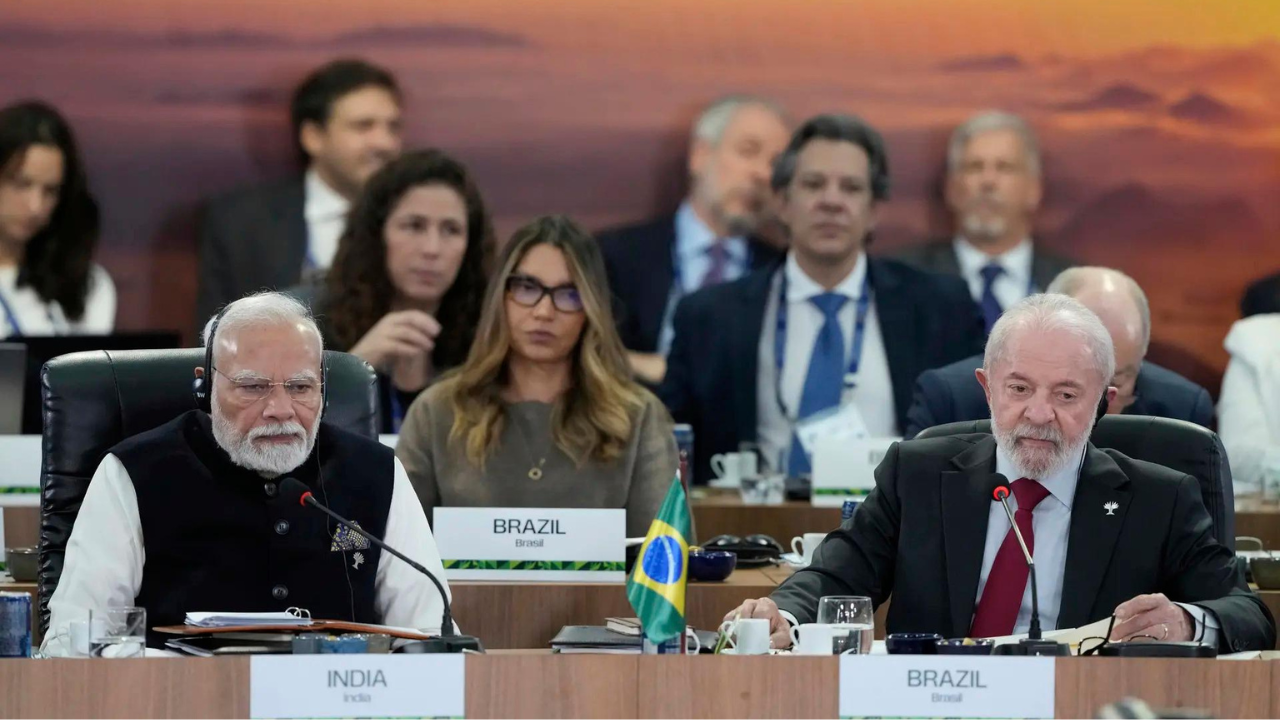
The BRICS group of nations is currently facing a major challenge in reaching a common agreement regarding the ongoing conflict in the Middle East. While the member countries all want to see an end to the violence, their individual political goals and relationships make a unified statement difficult to achieve. India has maintained its long-standing support for the Palestinian cause and a two-state solution, even as it balances its growing ties with other global powers.
Main Impact
The inability of BRICS to form a single, strong voice on the Middle East shows the internal friction within the group. As BRICS expands to include more countries, finding common ground on sensitive global issues becomes harder. This lack of consensus limits the group's ability to act as a powerful alternative to Western-led organizations when it comes to international peace and security. For India, this situation requires a careful balancing act to ensure its national interests and traditional foreign policy values are both protected.
Key Details
What Happened
During recent high-level meetings, officials from BRICS nations discussed the humanitarian crisis and the political future of the Middle East. While there is a general call for a ceasefire and more aid for civilians, the specific language used to describe the conflict remains a point of debate. Some members want to take a very firm stand against specific military actions, while others prefer a more neutral tone that focuses on long-term peace talks.
India has been clear about its position. The Indian government supports the creation of an independent Palestinian state that exists peacefully alongside Israel. At the same time, India has condemned acts of terrorism and has called for the immediate release of hostages. This middle-path approach is different from some other BRICS members who have taken more one-sided positions in the conflict.
Important Numbers and Facts
The BRICS group recently grew from five members to a larger group including Egypt, Ethiopia, Iran, and the United Arab Emirates. This expansion means the group now represents a much larger portion of the world's population and oil production. However, it also brings in countries with very different views on Middle Eastern politics. For example, Iran and South Africa have been very vocal in their criticism of certain military operations, while the UAE and India maintain more complex diplomatic channels with all parties involved.
Background and Context
To understand why this is so difficult, we have to look at the history of these countries. India was one of the first non-Arab countries to recognize the Palestine Liberation Organization (PLO) as the sole representative of the Palestinian people. This historical bond is strong. However, in the last twenty years, India has also built a very close relationship with Israel in areas like technology, agriculture, and defense.
Other BRICS members have their own reasons for their stances. South Africa has even taken legal steps at the international level to challenge military actions in Gaza. Russia and China often use these discussions to criticize Western influence in the region. Because every country has a different history and different current needs, writing a single document that everyone can sign is a massive task for diplomats.
Public or Industry Reaction
Foreign policy experts have noted that the "sharp differences" mentioned by government officials are a sign of growing pains for BRICS. Some analysts argue that BRICS should focus more on trade and economics where they agree, rather than trying to solve deep-seated political wars. Others believe that if BRICS cannot agree on a major crisis like the one in the Middle East, it will struggle to be seen as a serious leader in world politics.
In India, the public reaction is often mixed. Many people support the government's humanitarian aid to Palestine, while others emphasize the importance of the security partnership with Israel. The government’s ability to stay in the middle is seen by many as a sign of "strategic autonomy," which means making choices based on India's own needs rather than following other big powers.
What This Means Going Forward
Moving forward, we can expect BRICS to continue holding meetings, but they may stick to broader statements about peace and humanitarian aid. It is unlikely that the group will take a specific, unified action that would change the situation on the ground. For India, the focus will remain on providing aid to those in need and pushing for a "two-state solution" through diplomatic talks.
The group will also have to figure out how to manage its new members. With countries like Iran and the UAE now at the table, the Middle East is no longer just an outside issue for BRICS—it is an internal one. How they handle these differences will determine if BRICS becomes a stronger political force or remains mostly an economic club.
Final Take
The struggle for consensus within BRICS highlights the reality of modern global politics. Even groups that want to change the world order find it hard to agree when local interests and long histories are involved. India’s steady support for Palestine, combined with its call for peace, shows a commitment to traditional values even in a rapidly changing and divided world.
Frequently Asked Questions
What is the "two-state solution" India supports?
The two-state solution is a proposed plan where two separate countries, Israel and Palestine, live side-by-side in peace with recognized borders. India has supported this idea for many years as the best way to end the conflict.
Why is it hard for BRICS to agree on the Middle East?
It is hard because the members have different relationships with the countries involved. Some members have very close ties to Israel, while others are strong supporters of Palestine or have their own regional rivalries that influence their views.
Has the expansion of BRICS changed its goals?
The expansion has made the group larger and more diverse. While its main goal is still to give developing nations more power in the world, the addition of new members has made it more difficult to reach a quick agreement on political and security issues.



