
Summary
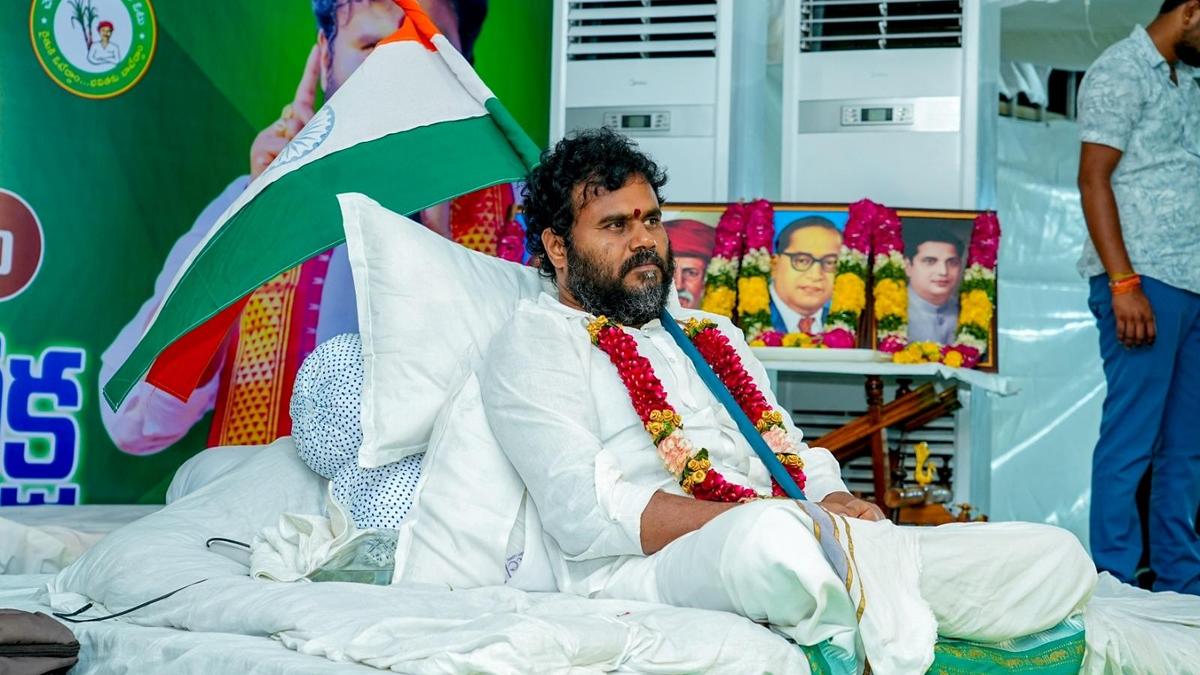
Bode Ramachandra Yadav, the president of the Bharat Chaitanya Yuvajana Party (BCYP), has reached the third day of his hunger strike in Guntur. The protest is part of a larger movement to demand better rights and representation for various communities. As the strike continues, tensions have risen between the protesters and local authorities. On the third day, the situation escalated when supporters blocked a major national highway, leading to police intervention and the detention of several individuals.
Main Impact
The ongoing hunger strike has created a significant impact on both the political and daily life in Guntur. By blocking the national highway, the protesters caused a major traffic jam that lasted for hours. This disruption affected hundreds of travelers and transport vehicles that rely on this route for trade and travel. The protest has also forced the local police to deploy more officers to the area to prevent further chaos. Politically, the strike is putting pressure on the state government to address the demands of the BCYP and the groups they represent.
Key Details
What Happened
Bode Ramachandra Yadav started his hunger strike three days ago to bring attention to specific social and political issues. On the third day, his supporters decided to take their protest to the streets. They gathered on the national highway, sitting on the road to stop the flow of vehicles. This move was intended to show the strength of their movement and to force the government to listen. The police arrived quickly to clear the road. When the protesters refused to move, the police had to take action to restore the flow of traffic.
Important Numbers and Facts
The protest has seen a steady increase in the number of participants over the last 72 hours. During the highway blockade, the police took approximately 30 protesters into custody. These individuals were moved to a nearby police station to prevent the situation from getting worse. Medical teams are also monitoring the health of Bode Ramachandra Yadav, as a three-day fast can lead to serious health problems like dehydration and low blood sugar. The protest site remains under heavy guard as more supporters continue to arrive in Guntur.
Background and Context
The Bharat Chaitanya Yuvajana Party (BCYP) is a political group that focuses on the needs of the Backward Classes (BC) in Andhra Pradesh. For a long time, these groups have felt that they do not get enough support or fair treatment from the government. Bode Ramachandra Yadav has become a prominent voice for these communities. Hunger strikes are a common way for leaders in India to show their commitment to a cause. By refusing to eat, the leader shows that they are willing to suffer for the sake of the people they represent. This method often gains a lot of public attention and can lead to talks between the party and the government.
Public or Industry Reaction
The reaction to the strike has been mixed. Many members of the Backward Classes have expressed strong support for Yadav, praising his courage and dedication. They believe that such drastic measures are necessary to make the government take their problems seriously. On the other hand, many commuters and local business owners are frustrated by the highway blockade. They argue that while everyone has a right to protest, blocking a main road causes unnecessary trouble for the general public. The local police have stated that their main goal is to keep the peace and ensure that the law is followed, which is why they had to move the protesters away from the highway.
What This Means Going Forward
As the hunger strike enters its fourth day, the focus will be on the health of Bode Ramachandra Yadav. If his condition gets worse, the government may be forced to intervene or move him to a hospital. This could lead to more anger among his followers. There is also the possibility that the BCYP will organize more protests in other parts of the state if their demands are not met. The government will need to decide whether to start a dialogue with the party leaders or continue to use police force to manage the crowds. The next few days will be critical in determining if this protest leads to a peaceful solution or more conflict.
Final Take
The hunger strike by Bode Ramachandra Yadav is a clear sign of the growing political tension in the region. It highlights the deep-seated issues that many communities feel have been ignored for too long. While the disruption to the highway has caused problems for many, the message behind the protest is reaching a wide audience. The situation in Guntur serves as a reminder that political leaders must find ways to listen to the concerns of all citizens to maintain social order. How the authorities handle the coming days will show their approach to handling dissent and social justice issues.
Frequently Asked Questions
Who is Bode Ramachandra Yadav?
Bode Ramachandra Yadav is the leader of the Bharat Chaitanya Yuvajana Party (BCYP). He is a political figure known for advocating for the rights of Backward Classes in Andhra Pradesh.
Why is the hunger strike happening?
The strike is a protest to demand better social and political representation for certain communities. The BCYP wants the government to address specific grievances related to the welfare of these groups.
What happened to the protesters who were arrested?
About 30 protesters were taken to a police station after they blocked a national highway. They were moved to clear the road and ensure that traffic could move safely again.

