
Summary
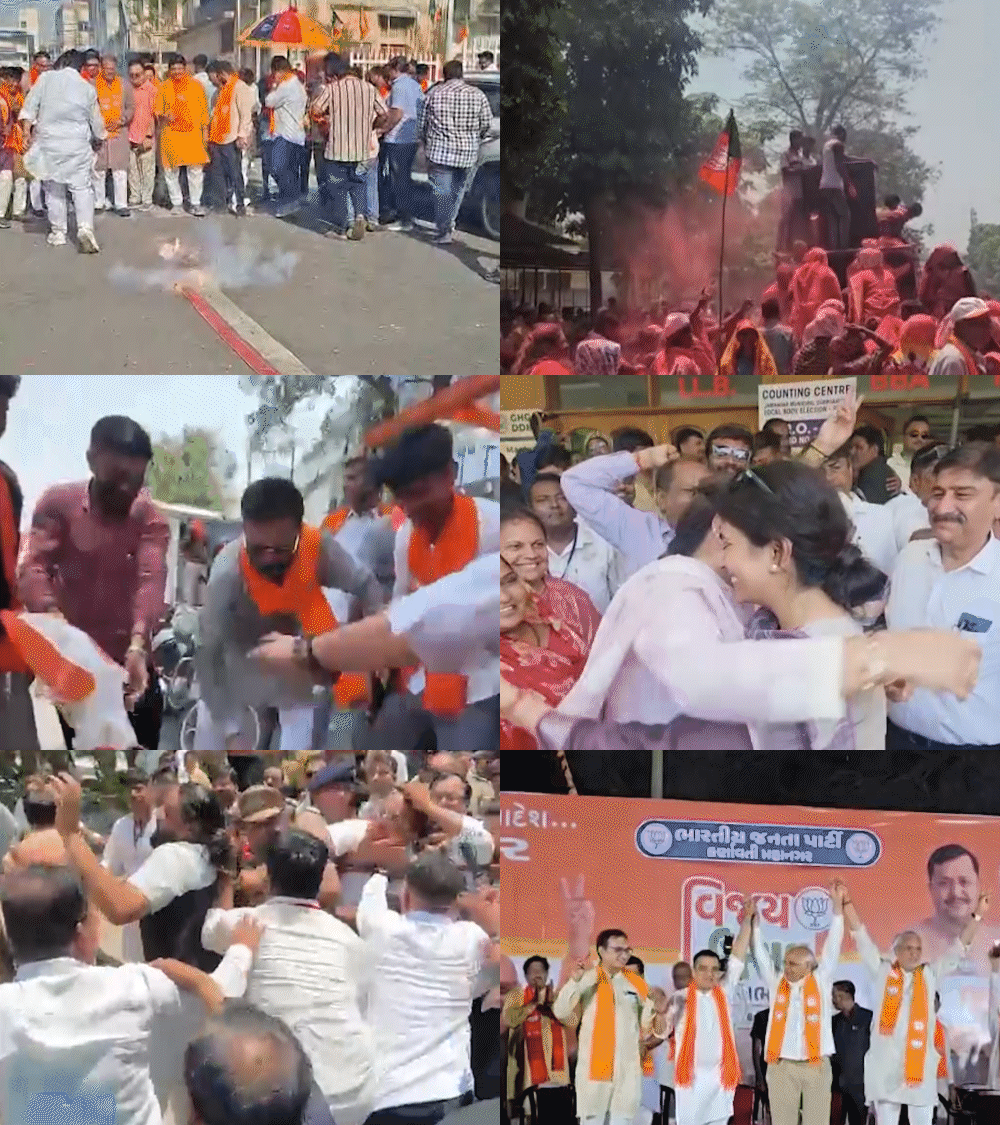
The Bharatiya Janata Party (BJP) has achieved a massive victory in the Gujarat local body elections by winning all 15 Municipal Corporations. Despite visible public protests and local issues reported before the voting day, the opposition parties failed to turn that anger into votes. The results show that the BJP continues to have a very strong grip on the urban areas of the state, while the Congress and Aam Aadmi Party (AAP) struggled to win even a small number of seats.
Main Impact
This election result confirms that the BJP remains the primary choice for voters in Gujarat's cities. By winning every single one of the 15 Municipal Corporations, the party has shown that its organizational power is far ahead of its rivals. The most significant impact is the complete failure of the opposition's top candidates, often called their "racehorses," who could not win their own seats. This sweep gives the BJP total control over urban development and local governance across the state for the next five years.
Key Details
What Happened
The election covered 15 major urban centers in Gujarat. While the BJP won the overall control of every corporation, there were some surprising local results. In Ahmedabad, the BJP suffered a major shock in the Khadia ward. Khadia has long been considered a safe and strong area for the BJP, but this time, the Congress party managed to win all four seats in that ward. Residents in Khadia had previously expressed their unhappiness with local issues, and this was one of the few places where that dissatisfaction showed in the final count.
In other cities, famous names faced defeat. In Rajkot, Naynaba Jadeja, who is the sister of famous cricketer Ravindra Jadeja and a Congress candidate, lost her seat. Similarly, RJ Abha, another well-known face for the Congress in Rajkot, could not secure a win. In Surat, the AAP state general secretary Manoj Sorathiya also faced a loss, showing that the "third party" momentum seen in previous years has slowed down.
Important Numbers and Facts
The voter turnout across the 15 corporations averaged around 55 percent. This was lower than many experts expected, especially after the government updated the voter lists. Here are the key figures from the election:
- Highest Turnout: Vapi recorded the highest voting percentage at 72.29 percent. This was the first time Vapi voted as a Municipal Corporation.
- Lowest Turnout: Gandhidham saw the lowest participation, with only 46.03 percent of voters showing up.
- Missing Voters: More than 4.9 million registered voters chose not to cast their ballots in this election.
- Reservation: This was the first major local election held after the implementation of 27 percent reservation for Other Backward Classes (OBC).
Background and Context
This election was very important because it followed a process called Special Intensive Revision (SIR), which was meant to clean up and update the voter lists. There was also a lot of discussion about the new 27 percent OBC reservation policy. Before the polls, many people thought the BJP might face a tough challenge because of protests over local problems like bad roads, water supply, and taxes. However, the final results show that these protests did not change the overall voting pattern in most cities. The BJP managed to keep its supporters loyal, while the opposition could not convince enough people to switch sides.
Public or Industry Reaction
The reaction to the results has been mixed. BJP supporters are celebrating what they call a "vote for development." They believe the results show that people trust the party's leadership. On the other hand, political experts are looking closely at the low voter turnout. The fact that nearly 50 lakh people stayed home suggests that many citizens might be feeling indifferent or unhappy with all the available choices. The loss of high-profile candidates from the Congress and AAP has led to questions about the future of the opposition in Gujarat’s urban politics.
What This Means Going Forward
With total control over all 15 corporations, the BJP now has no obstacles in implementing its urban policies. However, the loss in Khadia serves as a warning that even strong areas can be lost if local complaints are ignored. The low turnout in cities like Gandhidham is also a sign that the parties need to work harder to connect with urban voters. For the Congress and AAP, these results mean they need to completely rethink their strategy if they want to remain relevant in Gujarat. The focus will now move to how these newly elected members handle the basic city problems that caused protests before the election.
Final Take
The BJP has once again proved that it is the dominant force in Gujarat's cities. While the opposition managed a small victory in places like Khadia, it was not enough to stop the overall wave. The high turnout in Vapi shows a new energy in newly formed corporations, but the millions of voters who stayed home across the state remain a challenge for every political party. The BJP now holds the keys to every major city, and the pressure will be on them to deliver on their promises.
Frequently Asked Questions
Which city had the highest voter turnout?
Vapi had the highest voter turnout at 72.29 percent. This was a significant event as it was Vapi's first election after becoming a Municipal Corporation.
Did any famous candidates lose the election?
Yes, several well-known candidates lost, including Naynaba Jadeja (sister of cricketer Ravindra Jadeja) and RJ Abha in Rajkot, as well as Manoj Sorathiya from the AAP in Surat.
What happened in the Khadia ward of Ahmedabad?
In a surprising result, the Congress party won all four seats in the Khadia ward. This area was traditionally a very strong base for the BJP, but voters chose the opposition this time.



