
Summary
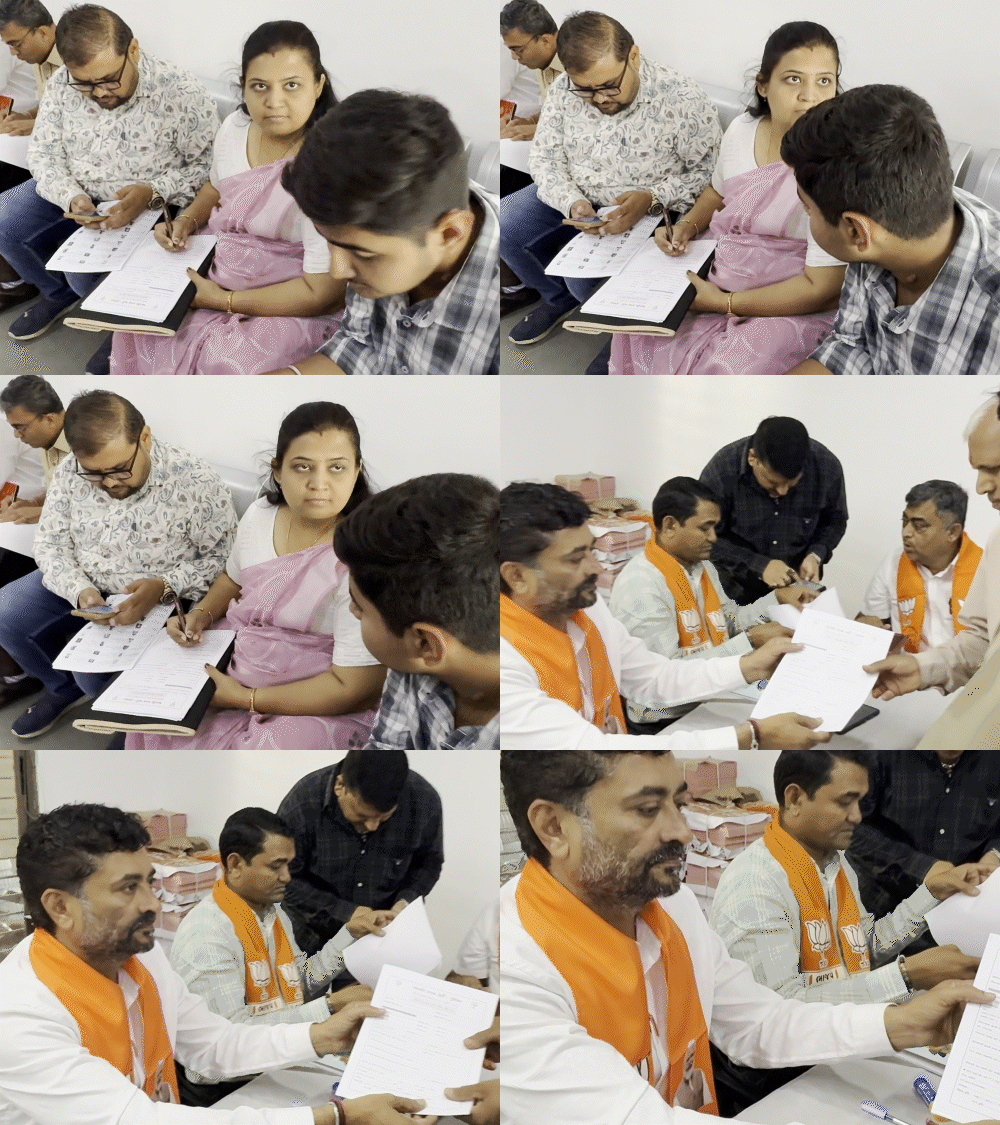
The Bharatiya Janata Party (BJP) has officially started its candidate selection process for the upcoming municipal corporation elections in Gujarat. On April 1, 2026, party leaders and observers gathered in major cities like Surat, Rajkot, and Vadodara to hear from local members who want to run for office. This process, known as the "sense" taking procedure, helps the party decide who has the best chance of winning. While the party aims for a smooth selection, a controversial social media post from a former official in Rajkot has sparked a debate about how real these selections actually are.
Main Impact
This selection process is the first major step toward the local elections in 15 municipal corporations. The high number of people showing up to apply shows that there is a lot of competition within the party. By sending observers to talk directly to local workers, the BJP is trying to show that it follows a democratic path. However, the pressure is high because the party needs to pick strong candidates to beat rivals like the Aam Aadmi Party (AAP), which has gained ground in certain areas over the last few years.
Key Details
What Happened
In Surat and Rajkot, the BJP offices were filled with hundreds of people carrying their resumes. These individuals hope to get a ticket to contest the municipal elections. In Surat, the process began at the Udhna BJP office at 10:00 AM. A panel of 12 observers arrived to meet with workers from the first 12 wards. In Rajkot, the process is scheduled to last for two days at the "Kamalam" city office, where 9 observers are listening to candidates from 18 different wards.
Important Numbers and Facts
The scale of this event is quite large. In Rajkot alone, more than 50 people from each ward have come forward to express their interest in running for office. This means hundreds of applications must be reviewed in just a few days. In Surat, the focus is on Wards 1 through 12, which include areas with a large Patidar population. These areas are politically sensitive because they saw a tough fight between the BJP and AAP in the previous election. To manage this, the party has divided the observers into four different groups to speed up the interviews.
Background and Context
The "sense" process is a traditional method used by the BJP to gauge the popularity of potential candidates. Instead of leaders simply picking their favorites, they send "observers" (senior leaders from other regions) to listen to what local workers and supporters think. This is meant to reduce internal fighting and ensure that the person chosen is actually liked by the local community. This year, the timing of the process has caught people's attention because it falls on April 1st, also known as April Fools' Day. This led to a viral WhatsApp status by Atul Pandit, a former education committee chairman in Rajkot, who wrote that some people would be made fools while others would do the fooling during this process.
Public or Industry Reaction
The reaction among party workers has been a mix of excitement and nervousness. Many young workers feel this is their chance to enter politics. However, the comment by Atul Pandit has created a stir. His message suggested that the selection process might just be a formality and that the winners might already be decided behind closed doors. Despite this, the Surat BJP President, Paresh Patel, told reporters that the process is completely fair. He insisted that even the smallest worker in the party has the right to speak and present their case to the observers.
What This Means Going Forward
Once the observers finish their meetings in Surat, Rajkot, and other cities, they will prepare a list of potential names for each ward. This list will be sent to the state-level leadership in Gandhinagar. The top leaders will then make the final decision on who gets to represent the party. The BJP is being extra careful in areas like Varachha and Katargam in Surat. Since these areas have many Patidar voters, the party wants to find "strong and popular faces" who can prevent the AAP from winning seats again. The final list of candidates is expected to be announced soon after the state leadership reviews the feedback from these observers.
Final Take
The massive crowds at the BJP offices show that the party still has a very strong base of people wanting to serve in local government. While internal critics might question the fairness of the selection, the party is moving forward with a clear plan. By focusing on local feedback and carefully watching their competitors, the BJP is trying to build a winning team for the upcoming municipal battles. The next few weeks will show if this "sense" process leads to a united front or more internal disagreements.
Frequently Asked Questions
What is the "sense" process in Gujarat elections?
It is a method where senior party leaders act as observers and visit different cities to listen to local workers. They collect names of people who want to contest the election and check who is most popular in each ward.
Why is the Surat election selection so important this time?
Surat is important because the Aam Aadmi Party (AAP) performed very well there in the last election. The BJP is working hard to pick the right candidates to win back those areas and maintain their control over the city corporation.
Who makes the final decision on the candidates?
While the observers collect the names and feedback from the local level, the final list of candidates is decided by the state-level election committee and top party leaders.



