
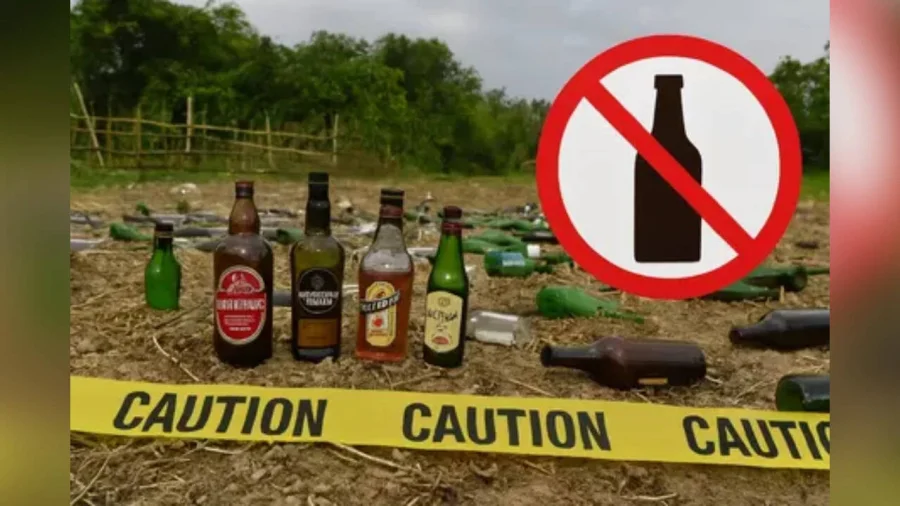
The promise was straightforward: ban alcohol in Bihar, and women would be safer. A new research paper now challenges that promise head-on, arguing the policy has not delivered what it set out to achieve — and that the state may be paying a heavy price to keep it.
The paper recommends that Bihar withdraw its alcohol prohibition altogether. It argues that the ban has failed to curb crimes against women, while pushing the liquor trade underground. It also makes a revenue argument: restoring excise duty on alcohol could add roughly 15 percent to state coffers.
What the research paper is actually recommending
The central ask is not a tweak to enforcement. It is a policy reversal. The paper calls for Bihar to exit prohibition and return to a regulated, taxed liquor regime.
According to the report's findings, prohibition has not been the safety instrument it was projected to be. Crimes against women — the very problem the ban was meant to address — have not come down in any meaningful way, the paper says.
Instead, the ban has created a parallel economy. Illicit liquor trade has increased under prohibition, the report claims, bringing its own set of risks that a legal, regulated market would not carry.
Why the safety argument matters more than the politics
Bihar's prohibition was framed as a protective measure for women in a state where alcohol-fuelled domestic violence was a visible social problem. That framing gave the policy widespread emotional support.
This report attacks that very foundation. If the ban cannot be shown to reduce crimes against women, the paper argues, its core justification weakens. The state is then left with a policy that costs revenue, fuels illegal trade, and delivers little measurable safety gain.
For ordinary families, the stakes are direct: household finances, public health risks from spurious liquor, and the question of whether women actually feel safer today than before the ban.
The illicit liquor trade problem prohibition cannot escape
When legal supply is cut off, demand does not disappear. The paper says prohibition has pushed liquor sales into unregulated, illegal channels where quality and safety standards simply do not exist.
Illicit liquor brings dangers far beyond what a regulated market would present — from toxic batches to criminal networks profiting from the trade. The report appears to frame this as an unintended consequence that prohibition's supporters rarely account for.
The broader point: banning a product does not eliminate it. It only decides who controls the supply.
The 15 percent revenue argument: what it would mean for Bihar
Bihar lost a significant stream of tax income when it went dry. Liquor excise duty is one of the more reliable sources of state revenue in India, and prohibition removed it entirely.
The research paper estimates that restoring excise duty could lift state revenues by about 15 percent. For a state that ranks low on most development indicators, that is not a small number. It is money that could be redirected into schools, hospitals, and employment programmes.
This is the report's central trade-off: a symbolic policy with unproven safety outcomes, set against measurable revenue that could fund the state's real development needs.
Education, health, jobs: the priorities the report wants Bihar to focus on
The paper does not stop at prohibition. It places the alcohol ban within a wider development critique, identifying education, health, and employment as the state's true priorities.
The argument is interconnected: better education improves health awareness, better health raises productivity, and jobs give families economic stability. Prohibition, in this view, is a distraction from these harder, longer-term challenges.
The report seems to suggest that women's safety will improve more through economic empowerment, education, and social development than through an alcohol ban that is not working.
Confirmed facts vs what remains unclear about the report
It is important to separate what is established from what is not yet verifiable. The headline claim — that the report recommends withdrawing Bihar's prohibition — is confirmed by the story brief. The paper's arguments about crimes against women, illicit liquor, and the 15 percent revenue estimate are all attributed to the report itself.
What remains unclear: the authors of the paper, the institution behind it, the research methodology, and the date of publication were not disclosed in available information. No independent verification of the paper's data has been possible at this stage.
There is also no reported response yet from the Bihar government to the paper's recommendations. All of this should be treated as an unfolding policy debate rather than a settled finding.
Why this debate is bigger than one state
Prohibition has been tried in different Indian states at different times, and the same questions keep recurring: Is the ban actually reducing harm? Is enforcement possible? How much revenue is being sacrificed? Bihar's experience now becomes part of that larger national conversation.
The report's value is that it reframes the debate from emotion to evidence. Whether one agrees with its conclusion or not, it forces a question that has often been avoided: What does the state actually get in return for prohibition?
That is a question citizens, policymakers, and political parties will now have to engage with — not just in Bihar, but across India.
Risks and the case for caution
Withdrawing the ban would not be without risks. Alcohol consumption could rise in households, and the social costs that originally motivated prohibition could resurface. Any decision to reverse the policy would need safeguards, public health messaging, and support structures in place.
Supporters of the ban argue that prohibition is not only about measurable crime statistics — it also changes social norms and protects families from a visible source of distress. For them, the revenue argument is cold comfort against what they see as a moral commitment.
The report's case is for evidence-based policy, not for alcohol promotion. Even so, any government acting on it would face significant political resistance in a state where the ban remains a popular symbol.
What should happen next: the practical questions
For the Bihar government, the report raises a simple but difficult question: If prohibition has not reduced crimes against women, what has it achieved that justifies the revenue loss?
The honest answer requires data — on crime trends, on illicit liquor incidents, on revenue foregone. The report invites that data-backed debate.
For citizens, the takeaway is simpler: the link between alcohol and women's safety is real, but the link between banning alcohol and achieving safety is not automatic. Policies must be judged by outcomes, not intentions.
Future outlook: what could come of this report
Reports of this kind do not change policy overnight. But they change the terms of the conversation. If the paper's findings hold up to scrutiny, it could push Bihar's policymakers to commission their own review of prohibition's costs and benefits.
It could also influence political discourse. With state finances under pressure, the 15 percent revenue estimate is a number that is unlikely to be ignored in budget discussions.
Whether the state acts on it is another matter. But the debate has now been opened — and the burden of evidence has shifted to those defending the ban.
Our Take
This report deserves attention not because it is anti-prohibition, but because it is pro-evidence. If a policy sold as protective for women cannot demonstrate that it protects them, continuing it demands a different justification.
The deeper truth the report points to is uncomfortable: women's safety in Bihar will not be secured by banning a drink. It will be secured by better policing, better education, better health systems, and better economic opportunities. Those are harder promises to make than prohibition — but they are the ones that actually matter.
The state should not rush to reverse the ban without safeguards. But it should also stop treating the ban as beyond question. The women of Bihar deserve policies that work, not policies that feel good.
Frequently Asked Questions
Why is a research paper asking Bihar to withdraw the alcohol ban?
The paper argues that prohibition has not reduced crimes against women — the central promise of the ban — while illicit liquor trade has increased. It also says restoring excise duty on alcohol could add about 15 percent to state revenues, which could be directed toward development priorities.
Has the alcohol ban actually reduced crimes against women in Bihar?
According to the research paper, the ban has not reduced crimes against women. The report argues that this weakens the core justification for prohibition. However, the paper's methodology and data have not been independently verified, and no official government response has been reported.
How could withdrawing the ban boost Bihar's revenue?
When Bihar went dry, it lost liquor excise duty — a steady source of tax income for state governments. The research paper estimates that restoring the excise regime could raise state revenues by roughly 15 percent, providing funds that could support education, health, and job creation.
What development priorities does the report highlight for Bihar?
The paper identifies education, health, and employment as key interconnected priorities. Its argument is that women's safety and overall development in Bihar will improve more through progress in these areas than through an alcohol ban that has not delivered its promised results.



