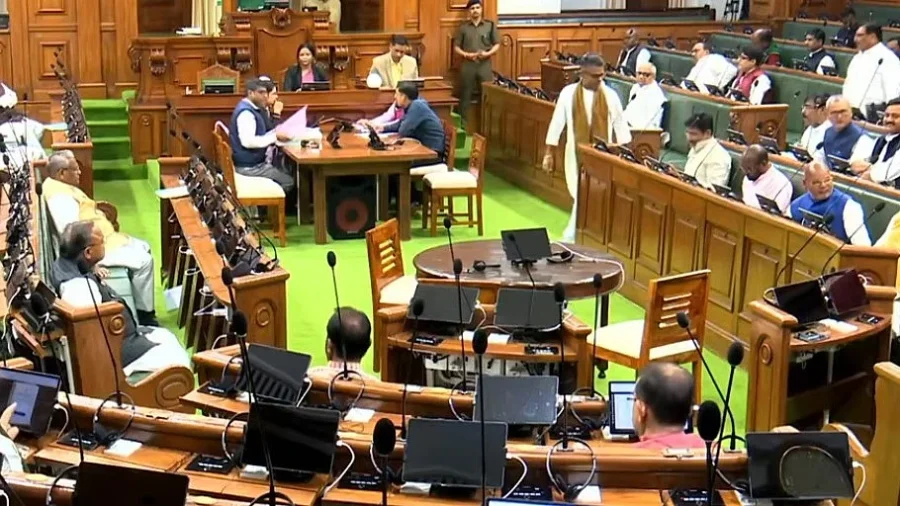
The final day of the Monsoon Session of the Bihar Legislative Assembly descended into acrimony on Friday as a recent student agitation triggered a fierce political showdown. The Opposition accused the Nitish Kumar government of unleashing excessive force on protesters, while the ruling alliance hit back by condemning alleged attacks on legislators and journalists during the demonstrations.
How the Student Protest Ignited the Assembly Floor
The controversy erupted soon after the assembly convened, when senior Rashtriya Janata Dal (RJD) MLA Alok Mehta sought to raise the issue of police action against students. His demand for a discussion immediately drew sharp reactions from the treasury benches, setting the stage for a day of disorder.
Why This Political Storm Matters for Bihar
The student agitation has become a flashpoint in Bihar's politics, exposing deep divisions between the ruling Mahagathbandhan and the Opposition. For the RJD and other opposition parties, the issue is a potent weapon to question the Nitish Kumar government's handling of law and order, particularly against young protesters. For the ruling alliance, the focus is on defending its actions and shifting blame onto the protesters for any violence.
Timeline of a Chaotic Session
The emotionally charged debate repeatedly disrupted proceedings. Members from both sides traded accusations, raised slogans, and forced the House into prolonged bouts of disorder. Normal business could only resume after repeated interventions by the Speaker, who struggled to maintain order amid the escalating war of words.
Who Is Affected by This Political Standoff
Beyond the legislators, the real impact falls on the students who were part of the agitation. Their grievances—whether related to exam reforms, fee hikes, or other issues—risk being overshadowed by the political slugfest. The public, too, watches as a session meant for legislative work descends into a spectacle of partisan conflict.
Official Responses and Accusations
While RJD MLA Alok Mehta led the charge from the Opposition, the ruling alliance countered by highlighting alleged attacks on their legislators and journalists during the student protests. Both sides presented their versions of events, but no official statement from the government on the specific police action was reported during the session.
What the Debate Reveals About Bihar's Political Climate
The stormy scenes are not an isolated incident but reflect a broader pattern of heightened political tension in Bihar. With the next state elections approaching, every issue—from student protests to law and order—is being weaponized by both camps. The Monsoon Session's chaotic end underscores the fragile nature of political consensus in the state.
Confirmed Facts vs What Remains Unclear
Confirmed: The final day of the Monsoon Session was disrupted by a political showdown over a student protest. Opposition MLAs accused the government of excessive force. Ruling MLAs condemned attacks on their members and journalists.
Unclear: The specific details of the police action against students, the exact nature of the alleged attacks on legislators and journalists, and whether any formal inquiry has been ordered remain unconfirmed from the available report.
Risks and Balanced View
While the Opposition's concerns about police excesses are serious, the ruling alliance's counter-claims about violence against lawmakers and media personnel also demand scrutiny. A one-sided narrative risks inflaming tensions further. Both sides must allow for a transparent investigation to establish facts.
Wider Trend: Student Protests as Political Flashpoints
Student agitations have historically been a powerful force in Indian politics, often triggering major policy shifts or political realignments. In Bihar, where youth unemployment and education quality remain pressing issues, such protests are likely to remain a recurring theme in the state's political discourse.
Practical Guidance for Readers
For those following Bihar politics, this incident highlights the importance of tracking student issues as a key electoral indicator. For students and activists, it underscores the need for peaceful protest and clear communication of demands to avoid being co-opted by political narratives.
Future Outlook
The political fallout from this session is unlikely to fade quickly. The Opposition is expected to continue raising the issue in the coming days, possibly through protests or legal challenges. The government may face pressure to release a detailed statement on the police action or order an inquiry to defuse the situation.
Our Take
The stormy scenes in the Bihar Assembly are a reminder of how quickly a student protest can escalate into a full-blown political crisis. While both sides have legitimate points, the real losers are the students whose grievances risk being buried under political mudslinging. A mature, fact-based debate—rather than sloganeering—is what Bihar's democracy needs right now.
Frequently Asked Questions
What triggered the chaos in the Bihar Assembly on the final day of the Monsoon Session?
A recent student agitation sparked a political showdown. The Opposition accused the Nitish Kumar government of excessive force against protesters, while the ruling alliance condemned alleged attacks on its legislators and journalists.
Who raised the issue of the student protest in the Assembly?
Senior RJD MLA Alok Mehta sought to raise the issue of police action against students, which led to an emotionally charged debate and repeated disruptions.
What were the main accusations from both sides?
The Opposition accused the government of unleashing excessive force on student protesters. The ruling alliance hit back by condemning alleged attacks on its legislators and journalists during the demonstrations.
How did the disruption affect the Assembly's business?
The House repeatedly descended into disorder, with members trading accusations and raising slogans. Normal business could only resume after prolonged bouts of disruption and intervention by the Speaker.