Summary
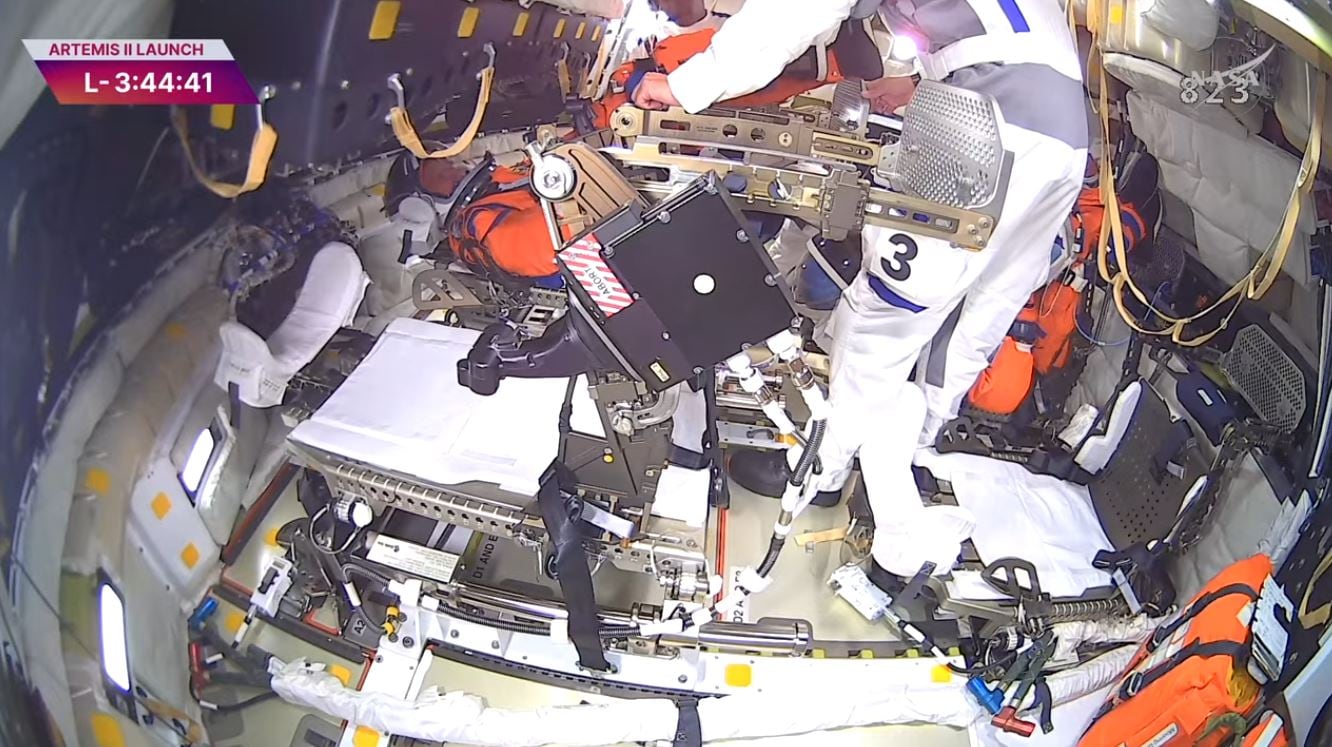
NASA is preparing to launch the Artemis 2 mission, which will send four astronauts on a journey around the Moon. This is a historic moment because it is the first time humans have traveled to the Moon's vicinity in over 50 years. The crew is currently inside the Orion spacecraft at the Kennedy Space Center in Florida as ground teams finish final safety checks. This 10-day mission serves as a vital test to ensure that humans can safely return to deep space and eventually land on the lunar surface again.
Main Impact
The Artemis 2 mission is the first major test of NASA’s new deep-space exploration system with a real crew on board. By sending people around the Moon, NASA is proving that its new rocket and capsule are safe for human travel. This mission moves the world one step closer to building a permanent base on the Moon. It also marks a shift from just visiting the Moon to staying there for long-term research. Success here will give scientists the confidence to move forward with even more ambitious plans, such as landing the first woman and the first person of color on the lunar surface in the coming years.
Key Details
What Happened
Early this morning, the four astronauts finished their final preparations and boarded the Orion capsule. The spacecraft is sitting on top of the Space Launch System rocket, which is the most powerful rocket NASA has ever built. Right now, technical teams are sealing the hatches of the capsule. This is a very important job because the seal must be perfect to keep air inside the ship while it is in the vacuum of space. The astronauts are currently performing final radio checks and monitoring their systems as the countdown continues.
The mission will not involve landing on the Moon. Instead, the crew will fly past the Moon and use its gravity to swing back toward Earth. During the trip, they will travel further into space than any human has gone before. They will also get a close-up view of the "far side" of the Moon, which is the side that always faces away from Earth. This area is difficult to study, so the photos and data they collect will be very valuable for scientists.
Important Numbers and Facts
The mission features a diverse crew of four people. Three are from the United States: Reid Wiseman, who serves as the commander; Victor Glover, the pilot; and Christina Koch, a mission specialist. The fourth member is Jeremy Hansen from Canada, making this an international effort. The launch is set for 6:24 PM local time in Florida. The entire trip will last 10 days from launch to splashdown in the ocean. The Orion capsule where the crew will live is quite small, roughly the size of a large van, meaning the four astronauts will be living in very close quarters for the duration of the flight.
Background and Context
To understand why Artemis 2 is so important, we have to look back at history. The last time humans went to the Moon was in 1972 during the Apollo 17 mission. After that, NASA focused on the Space Shuttle and the International Space Station, which stay much closer to Earth. The Artemis program is the new plan to go back to the Moon and stay there. Unlike the Apollo missions, which were mostly about exploration, Artemis is about building a sustainable presence. This means creating a place where people can live and work for weeks or months at a time. This mission is the second step in that plan. The first step, Artemis 1, was a successful test flight of the rocket and capsule without any people inside.
Public or Industry Reaction
The world is watching this launch with great excitement. President Donald Trump shared his support on social media, praising the bravery of the astronauts and the strength of the American space program. He noted that the entire world is looking at this mission as a sign of progress. Space industry experts are also excited because this mission uses technology from many different companies and countries. It shows that space exploration is becoming a global team effort. Many people see this as the start of a new "space race," but one that focuses on cooperation and long-term science rather than just competition.
What This Means Going Forward
Once the Artemis 2 crew returns safely to Earth, NASA will spend months studying the data from the flight. They will look at how the life support systems worked and how the crew handled the radiation in deep space. If everything goes well, the next mission, Artemis 3, will actually land astronauts on the Moon. That mission is expected to happen in a few years. Beyond that, NASA plans to build a small space station called the Gateway that will orbit the Moon. This station will act as a home base for astronauts and a starting point for future trips to Mars. Artemis 2 is the essential bridge that makes all these future goals possible.
Final Take
The launch of Artemis 2 is more than just a flight; it is a symbol of human curiosity and our desire to explore the unknown. By returning to the Moon, we are learning the skills needed to eventually travel to other planets. The four astronauts waiting in the capsule today are carrying the hopes of a new generation of explorers. Their 10-day journey will provide the answers we need to turn the dream of living in space into a reality.
Frequently Asked Questions
Will the astronauts walk on the Moon during this mission?
No, the Artemis 2 mission is a flyby. The crew will orbit the Moon and return to Earth to test the spacecraft's systems. A lunar landing is planned for the next mission, Artemis 3.
How long will the astronauts be in space?
The entire mission is scheduled to last 10 days. This includes the time it takes to reach the Moon, fly around it, and travel back for a splashdown in the Pacific Ocean.
Why is there a Canadian astronaut on a NASA mission?
The Artemis program is an international partnership. Canada provided important technology for the mission, and in exchange, one of their astronauts was chosen to be part of the first crewed flight to the Moon.