Summary
NASA is preparing to launch the Artemis 2 mission, sending four astronauts on a historic journey around the Moon. This is the first time in over 50 years that a crewed spacecraft will travel to the lunar region. The mission will last ten days and serves as a vital test for the technology needed to eventually build a permanent base on the Moon.
Main Impact
The launch of Artemis 2 marks a major turning point for human space travel. By sending a crew toward the Moon, NASA is proving that its new Orion spacecraft and Space Launch System rocket are safe for long-distance missions. This flight is the final step before the agency attempts to land humans on the lunar surface for the first time since the 1970s. It signals that the era of deep-space exploration has officially returned.
Key Details
What Happened
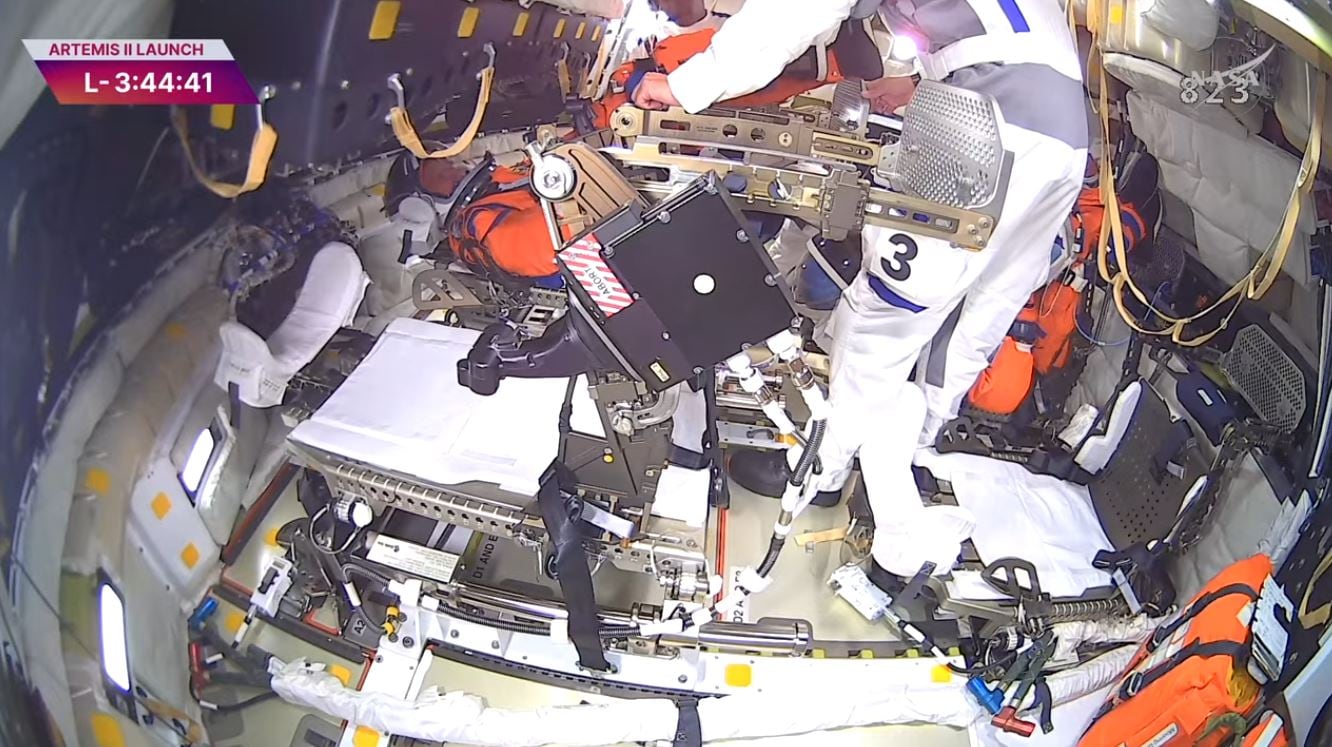
At the Kennedy Space Center in Florida, the final preparations for launch are nearly complete. The four astronauts have entered the Orion capsule and are strapped into their seats. Ground teams are currently sealing the hatches of the spacecraft. This is a critical safety step to ensure the cabin remains airtight and pressurized during the flight through the vacuum of space. The crew is waiting for the final "go" for launch as engineers monitor weather conditions and technical systems.
Important Numbers and Facts
The mission is scheduled to last 10 days from start to finish. The crew consists of four people: Americans Christina Koch, Reid Wiseman, and Victor Glover, along with Canadian Jeremy Hansen. This mission is notable for its diversity, including the first woman and the first person of color to fly a lunar mission. The Orion capsule they are traveling in is roughly the size of a large van, which will serve as their home for the duration of the trip. The launch is set for 6:24 PM local time in Florida.
Background and Context
The Artemis program is the modern successor to the Apollo missions that took place between 1968 and 1972. While the Apollo missions were focused on reaching the Moon quickly during the Cold War, the Artemis program has a different goal. NASA wants to establish a long-term presence on the Moon so that scientists can study it more closely. This mission does not involve landing on the surface. Instead, the crew will fly around the Moon and travel to its "far side," which is the side that always faces away from Earth. This will allow them to take high-quality photos and test how well the spacecraft communicates with Earth from such a great distance.
Public or Industry Reaction
The mission has gained significant attention from world leaders and the general public. President Donald Trump shared a message of support on social media, praising the bravery of the astronauts and the strength of the American space program. He noted that the entire world is watching this event. Within the space industry, experts are calling this a "make or break" moment. Success today would validate years of expensive research and development. People around the globe are following the live updates, as this represents the first time in a generation that humans have ventured so far from our home planet.
What This Means Going Forward
Once the 10-day mission is over, the Orion capsule will splash down in the ocean. NASA scientists will then spend several months analyzing every bit of data collected during the flight. They will look at how the radiation levels affected the crew and how well the life support systems worked. If Artemis 2 is successful, it will clear the way for Artemis 3. That future mission will actually land astronauts on the Moon’s South Pole. The ultimate goal is to use the Moon as a starting point for the first human mission to Mars in the coming decades.
Final Take
Today’s launch is a bridge between the history of the past and the possibilities of the future. The four astronauts inside the Orion capsule are doing more than just flying a spacecraft; they are testing the limits of human reach. This mission proves that the dream of living and working on other worlds is no longer just a story from a book, but a reality that is unfolding right now. The journey around the Moon is the first of many steps toward a new age of discovery.
Frequently Asked Questions
Will the astronauts land on the Moon during this mission?
No, the Artemis 2 mission is designed to orbit the Moon and return to Earth. The first landing on the lunar surface is planned for the next mission, Artemis 3.
How long will the astronauts be in space?
The entire mission is expected to last about 10 days. During this time, the crew will live and work inside the Orion capsule as it travels to the Moon and back.
Why is this mission considered historic?
It is the first time in over 50 years that humans have traveled to the Moon. It also features the most diverse crew in lunar history, including the first woman, the first person of color, and the first Canadian to make the trip.