Summary
The Artemis 2 mission has officially come to a successful end. Four astronauts returned to Earth safely after traveling around the Moon, marking the first time humans have visited the lunar region in more than 50 years. Their spacecraft, named Orion, landed in the Pacific Ocean near the coast of San Diego early this morning. This mission is a major milestone because it proves that modern technology can carry people deep into space and bring them back home without injury.
Main Impact
The success of Artemis 2 changes the future of space exploration. It confirms that NASA and its international partners are ready to move beyond low Earth orbit. For decades, astronauts only traveled to the International Space Station, which is relatively close to our planet. By reaching the Moon, this mission shows that the systems designed for deep space travel actually work. It also sets a new standard for inclusion in science, as the crew represented a wider range of people than any previous lunar mission.
Key Details
What Happened
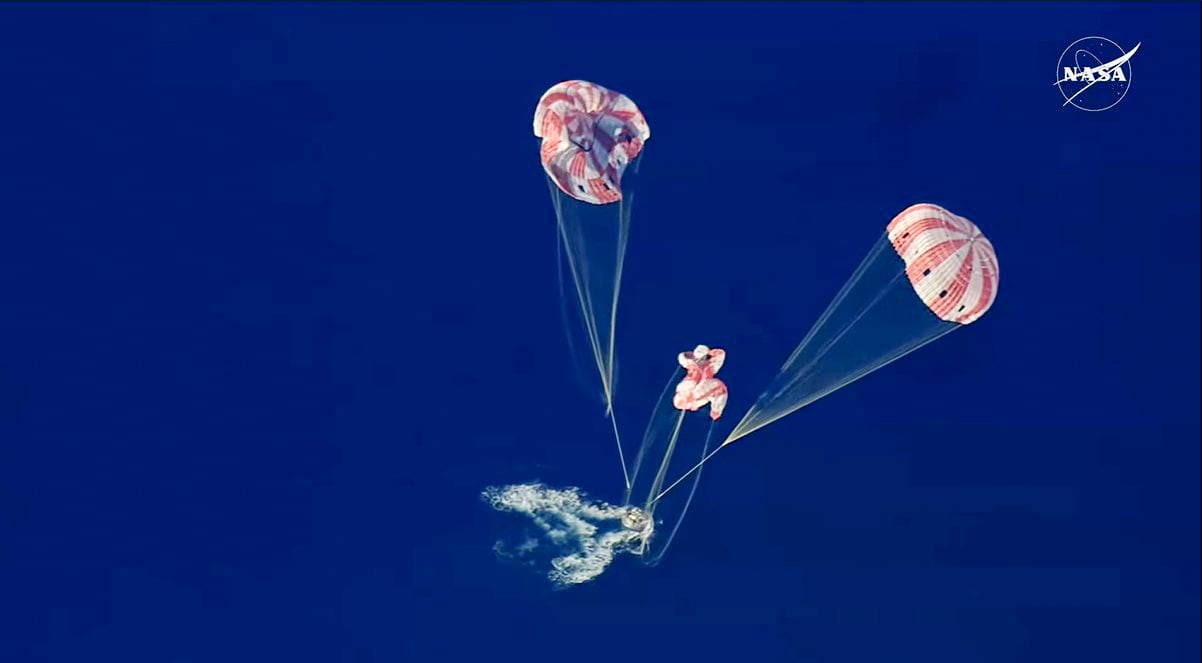
The Orion spacecraft entered the Earth's atmosphere at very high speeds, creating intense heat as it rubbed against the air. Special shields protected the astronauts from these high temperatures. After slowing down, the capsule deployed several large parachutes to ensure a soft landing in the water. The splashdown occurred just after 2:07 AM. Recovery teams from the U.S. Navy and NASA were already in the area to help the four crew members out of the capsule and onto a ship for medical checks.
Important Numbers and Facts
The mission included four specific crew members who each made history. Reid Wiseman served as the commander of the flight. Victor Glover became the first African American to travel to the Moon. Christina Koch became the first woman to take part in a lunar mission. Jeremy Hansen, representing the Canadian Space Agency, became the first person from a country other than the United States to leave Earth's orbit and head toward the Moon. This mission took place more than five decades after the last Apollo mission ended in 1972.
Background and Context
To understand why this is important, we have to look back at history. Between 1969 and 1972, the Apollo missions sent men to the Moon several times. After that, the focus of space travel shifted to reusable shuttles and the space station. While these were important, they did not go very far into space. The Artemis program was created to change that. Its goal is not just to visit the Moon, but to stay there. NASA wants to build a base where people can live and work for long periods. This mission, Artemis 2, was the final test flight before the agency attempts to land people on the lunar surface again.
Public or Industry Reaction
Leaders from around the world have praised the crew for their bravery and hard work. Space experts say that the perfect landing shows that the Orion capsule is one of the safest ships ever built. In Canada, there is great excitement because this was the first time a Canadian astronaut went so far into the solar system. Scientists are also happy because the mission collected a lot of data about radiation and how the human body reacts to being far away from Earth's protective magnetic field. This information will be used to keep future crews safe.
What This Means Going Forward
Now that the crew is home, NASA will spend months looking at the data from the flight. They need to make sure every system performed exactly as expected. If everything looks good, the next step is Artemis 3. That mission will be even more challenging because it involves landing on the Moon's surface, specifically near the South Pole. Scientists believe there is water ice in that area, which could be used to make air and rocket fuel. Eventually, the lessons learned from these Moon missions will help humans plan a trip to Mars, which is much further away and requires even more advanced technology.
Final Take
The return of the Artemis 2 crew is a reminder that we are entering a new age of discovery. It shows that when different countries work together, they can achieve things that seemed impossible just a few years ago. We are no longer just looking at the Moon through telescopes; we are actively preparing to live there. This mission was a vital bridge between our past achievements and a future where traveling to other worlds becomes a regular part of human life.
Frequently Asked Questions
Who were the astronauts on Artemis 2?
The crew consisted of Commander Reid Wiseman, Victor Glover, Christina Koch, and Jeremy Hansen. They represented both the United States and Canada.
Did the Artemis 2 crew land on the Moon?
No, this mission was designed to fly around the Moon and return to Earth. It was a test to make sure the spacecraft and life support systems work correctly before a future mission attempts a landing.
Where did the spacecraft land?
The Orion capsule landed in the Pacific Ocean, off the coast of San Diego, California. This is a common landing spot for NASA capsules because the water helps cushion the impact.