Summary
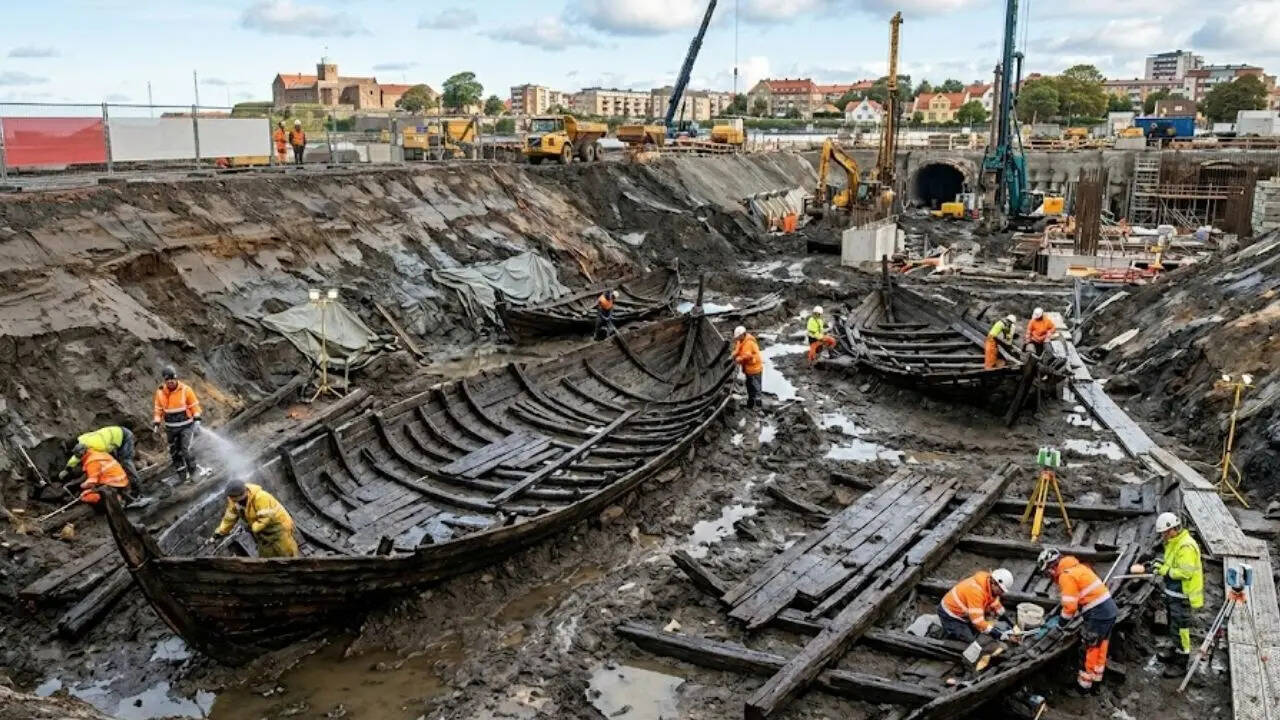
Archaeologists in Sweden have made a massive discovery while working on a local railway project. They found the remains of six ships that are hundreds of years old buried deep under the ground in the city of Varberg. These ships date back as far as the 14th century and provide a rare look into how people lived and traded long ago. This discovery is important because it shows how the city and its coastline have changed over the last 600 years.
Main Impact
The discovery of these six shipwrecks has turned a standard construction site into one of the most important historical digs in the region. Finding so many ships in one place is very rare. It helps historians understand the types of boats used for trade and travel in Northern Europe during the Middle Ages. The find also shows that the area where the city now stands was once a busy harbor where water reached much further inland than it does today.
Key Details
What Happened
The ships were found during a large project to build a new railway tunnel through Varberg. As workers were digging, they hit large pieces of old wood. Experts were called in to check the site and quickly realized they were looking at the remains of several ancient vessels. The ships were buried in layers of soil and mud that had been filled in over centuries. Because the ground was wet and lacked oxygen, the wood stayed in surprisingly good condition for hundreds of years.
Important Numbers and Facts
Archaeologists have identified six different ships so far. The oldest ship dates back to the mid-1300s, while others are from the 1400s, 1500s, and 1600s. One of the most exciting finds is a "cog," which was a common type of large merchant ship used by the Hanseatic League for trading goods across Europe. The ships vary in size, with some being small local boats and others being large vessels meant for long sea journeys. Experts are using modern tools like 3D scanning to map every piece of wood before they move the remains.
Background and Context
Varberg has always been a city with strong ties to the sea. In the past, it was a major center for trade between different parts of Scandinavia and the rest of Europe. Over time, the city grew, and the old harbor was filled with dirt and rocks to create more land for buildings and roads. This is why the ships were found under the city streets rather than in the water. Finding these ships is like opening a time capsule that tells the story of how the city was built and how its economy worked in the medieval period.
Public or Industry Reaction
The local community and history fans are very excited about the find. Many people have visited the site to see the work in progress. Scientists say this is a "dream discovery" because it is rare to find so many ships from different time periods in the same spot. While the discovery has caused some delays for the railway project, the construction company and the government are working together to make sure the history is saved. They want to ensure that the ships are properly recorded and preserved before the tunnel work continues.
What This Means Going Forward
Now that the ships have been found, the next step is to carefully remove them from the ground. This is a slow process because the old wood is very fragile. Once the pieces are out, they will be cleaned and studied in a lab. Researchers will look at the wood to see where the trees were grown, which can tell them if the ships were built locally or in another country. In the future, some of these ships might be put on display in a museum so that everyone can see them. The data gathered will also help update history books about trade in the Baltic and North Seas.
Final Take
This discovery reminds us that history is often hidden right beneath our feet. A simple project to improve modern transportation has led to a major breakthrough in our understanding of the past. By saving these ships, Sweden is preserving a vital part of its seafaring culture. These wooden remains tell a story of human effort, trade, and the changing nature of our world over many centuries.
Frequently Asked Questions
How old are the ships found in Varberg?
The ships date back to different times between the 14th and 17th centuries. The oldest ship is about 600 to 700 years old.
Why were the ships buried under a city?
The area used to be a harbor. Over hundreds of years, the water receded or the land was filled in with soil to build the city, leaving the ships buried underground.
What will happen to the ships now?
Archaeologists are carefully digging them up and using 3D technology to study them. They will be preserved and may eventually be shown in a museum.