
Summary
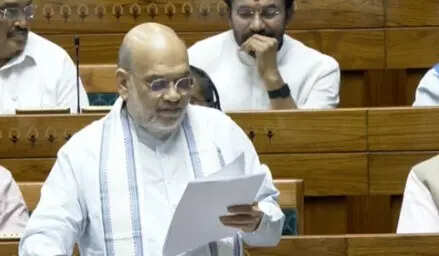
Union Home Minister Amit Shah has publicly criticized the INDIA bloc for its stance on the delimitation bill. He claimed that the opposition alliance is working against the interests of Scheduled Castes (SC) and Scheduled Tribes (ST) by opposing the bill. This matter is significant because it involves redrawing the boundaries of voting districts, which directly affects how many seats are reserved for these communities in Parliament and state assemblies.
Main Impact
The primary impact of this political debate is the potential change in representation for marginalized groups. If the delimitation process moves forward as the government plans, the number of seats reserved for SC and ST candidates is expected to rise. Amit Shah’s comments highlight a deep divide between the ruling party and the opposition over how electoral maps should be updated. This disagreement could influence voter sentiment among these communities in upcoming elections.
Key Details
What Happened
During a series of public statements, Amit Shah addressed the concerns surrounding the delimitation bill. He argued that the opposition's resistance is not just about administrative rules but is a direct move to prevent SC and ST communities from gaining more political power. He pointed out that the government intends to use the latest population data to ensure that every group gets fair representation based on their actual numbers.
Important Numbers and Facts
The delimitation process is tied to the national census. The government has stated that the redrawing of constituencies will take place after the first census conducted after the current year. This process is also a requirement for the implementation of the Women’s Reservation Bill, which seeks to reserve one-third of seats for women. By increasing the total number of seats, the government expects the number of SC and ST seats to grow proportionally. Currently, there are 84 seats reserved for SCs and 47 for STs in the Lok Sabha, and these numbers are set to change once the new boundaries are fixed.
Background and Context
Delimitation is the act of fixing the limits or boundaries of territorial constituencies in a country. This is done to reflect changes in the population over time. The goal is to make sure that each seat in the legislature represents a similar number of people. In India, a Delimitation Commission is usually set up to handle this task. The last time a full delimitation was done across the country was based on the 2001 census, but the number of seats was frozen until 2026 to encourage states to control population growth. Now that the 2026 date is approaching, the government is preparing to update these boundaries.
Public or Industry Reaction
The INDIA bloc, which includes several major opposition parties, has raised concerns about the timing and the method of this process. Some opposition leaders argue that the government might use delimitation to favor regions where they have more support. They also worry that states that have successfully managed their population growth might lose seats compared to states with higher population growth. On the other hand, tribal and caste-based organizations have shown interest in the move, hoping it will lead to a stronger voice in the national government.
What This Means Going Forward
Moving forward, the government must first conduct the national census, which was delayed previously. Once the census data is ready, the Delimitation Commission will begin the work of redrawing the maps. This will be a complex task that requires balancing the needs of different states and communities. The political tension is likely to increase as the process nears, with both sides fighting to ensure the new boundaries do not put them at a disadvantage. The outcome will shape the face of Indian politics for several decades.
Final Take
The debate over the delimitation bill is more than just a technical disagreement about maps. It is a fundamental fight over who gets a seat at the table in Indian democracy. While the government frames it as a move for social justice and fair representation, the opposition sees it as a strategic political tool. As the country moves closer to the 2026 deadline, the focus on SC and ST representation will remain a central part of the national conversation.
Frequently Asked Questions
What is the delimitation bill?
The delimitation bill refers to the legal framework used to redraw the boundaries of parliamentary and assembly seats based on the most recent population data to ensure fair representation.
Why is the opposition against the bill?
The opposition is concerned that the process might be used to give an unfair advantage to certain regions or political parties, and they have raised questions about the timing of the census and the redrawing of maps.
How does this affect SC and ST seats?
Since the number of reserved seats is based on population size, an increase in the total number of seats through delimitation is expected to lead to more reserved seats for Scheduled Castes and Scheduled Tribes.



