
Summary
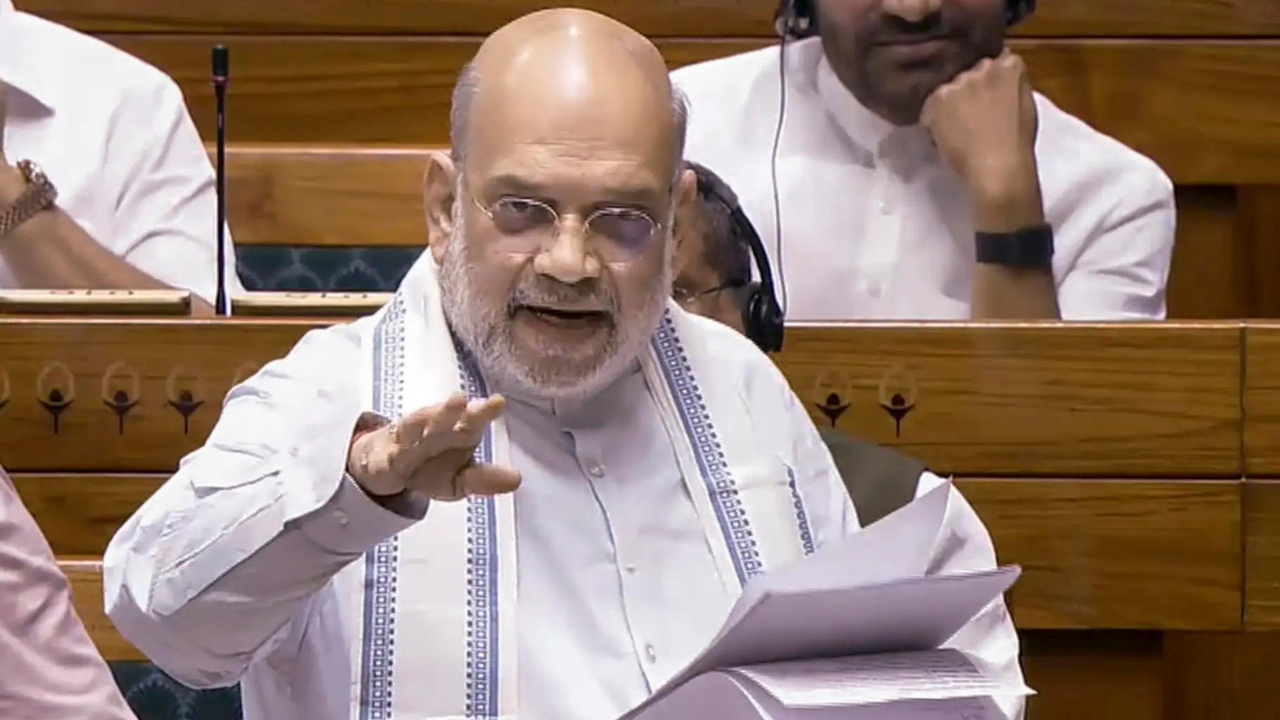
Union Home Minister Amit Shah recently addressed concerns about the political future of India’s southern states. He spoke out against claims that the government is trying to create a divide between the North and the South. Shah explained that the process of redrawing voting districts, known as delimitation, will be done fairly. He promised that no state would lose its influence in Parliament. This statement comes as a response to critics who fear that southern states might lose seats because of their successful population control efforts.
Main Impact
The main impact of Amit Shah’s statement is to provide a sense of security to leaders and citizens in South India. For a long time, there has been a fear that the North would gain more power in the Lok Sabha because its population is growing faster. By speaking on this issue, the Home Minister is trying to stop a political narrative that could lead to regional tension. The government wants to show that the upcoming changes in voting districts will not punish states that have done a good job with healthcare and family planning.
Key Details
What Happened
During a public discussion, Amit Shah countered the arguments made by the Opposition regarding the Women’s Reservation Bill and the delimitation process. The Opposition has argued that linking women's seats to the redrawing of boundaries is a way to delay the law. Shah denied this and said that the process is necessary to make sure the seats are distributed correctly. He made it clear that the government has no intention of letting a "North-South divide" happen under its watch.
Important Numbers and Facts
The current number of seats in the Lok Sabha is based on the population data from the 1971 census. This has been frozen for many years to prevent states with high population growth from gaining too much power. However, the law says that a new delimitation must happen after the first census taken after the year 2026. The Women’s Reservation Bill, which was passed recently, says that 33% of seats in the Lok Sabha and state assemblies will be reserved for women. This reservation will only start after the new boundaries are drawn.
Background and Context
To understand why this is a big deal, we have to look at how voting works in India. Each member of Parliament represents a certain number of people. If one state has a lot more people than another, it usually gets more seats. Over the last few decades, southern states like Kerala, Tamil Nadu, and Karnataka have worked hard to slow down their population growth. Meanwhile, northern states like Uttar Pradesh and Bihar have seen their populations grow much faster. If seats were handed out strictly by population today, the North would get many more seats, and the South would lose its voice in national decisions. This is why the topic is so sensitive and why Amit Shah had to address it directly.
Public or Industry Reaction
The reaction to this issue has been split along political lines. Opposition leaders from southern states have been very vocal. They argue that the government is using the Women’s Reservation Bill as a "carrot" while the "stick" is the delimitation process. They worry that the South will be marginalized. On the other hand, supporters of the government say that a fair census and boundary update are long overdue. They believe that every citizen's vote should have equal weight, regardless of which state they live in. Shah’s comments were meant to bridge this gap and reassure the public that the process will be transparent and balanced.
What This Means Going Forward
Going forward, the government will need to conduct a national census. This census was delayed due to the pandemic but is expected to happen soon. Once the census data is ready, a Delimitation Commission will be formed. This commission will look at the numbers and decide how to draw the new lines for voting districts. The biggest challenge will be finding a formula that respects the population changes without making the southern states feel left out. The government will likely face more questions as the 2026 deadline approaches. They will need to keep talking to all regional leaders to make sure everyone agrees with the plan.
Final Take
The debate over the North-South divide is about more than just numbers; it is about the unity of the country. Amit Shah’s promise to prevent a divide shows that the government is aware of the political risks. While the technical process of redrawing districts is required by law, the way it is handled will determine how united the country feels in the future. Ensuring that every part of India feels represented is the only way to move forward with major reforms like the Women's Reservation Bill.
Frequently Asked Questions
What is delimitation?
Delimitation is the process of redrawing the boundaries of voting districts to make sure each seat represents a similar number of people based on the latest census data.
Why are southern states worried about it?
Southern states have controlled their population growth better than northern states. They fear that a new seat count based on population will give the North more seats and reduce the South's political power.
When will the new voting boundaries be set?
The process is expected to start after the first census is conducted after the year 2026. The exact dates depend on when the national census is completed.



