
Summary
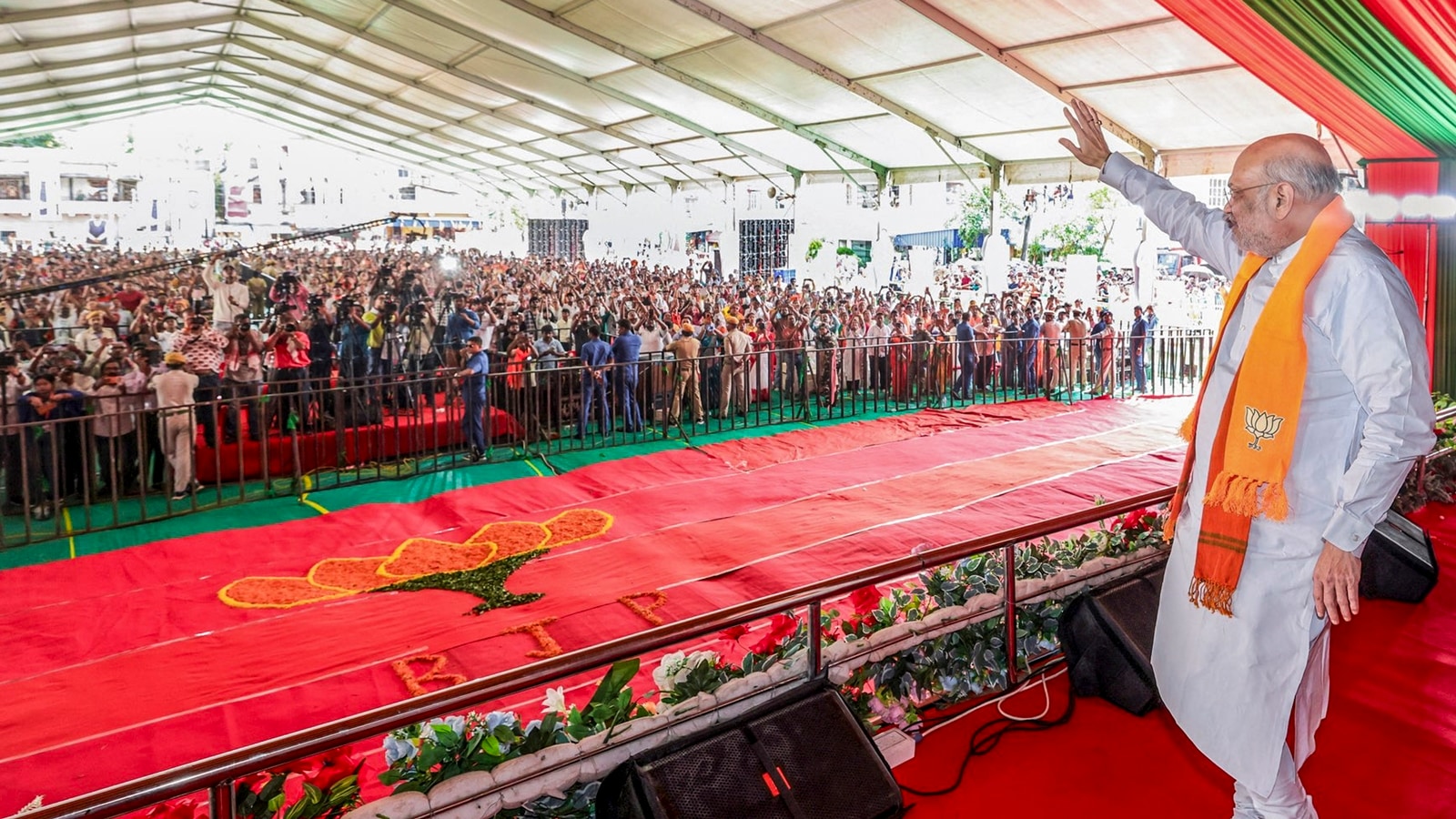
Union Home Minister Amit Shah recently criticized the state of Kolkata, claiming the city has declined significantly under the rule of the Trinamool Congress (TMC) and the previous Left Front government. During a political event, he stated that the once-famous "City of Joy" has been transformed into a "city of slums" due to decades of poor management. Shah argued that the lack of industrial growth and urban planning has left the residents of West Bengal's capital in difficult living conditions. This statement marks a sharp escalation in the political battle between the central government and the state leadership.
Main Impact
The primary impact of these comments is a renewed focus on urban development and infrastructure in West Bengal. By labeling Kolkata a "city of slums," Amit Shah is challenging the TMC’s record on housing and city maintenance. This narrative aims to shift the political conversation from social welfare schemes to the physical state of the city. For the people of Kolkata, this debate highlights long-standing issues such as overcrowded housing, poor drainage, and the slow pace of modernizing old neighborhoods. It also sets the stage for a high-stakes political contest where the quality of life in cities becomes a major voting issue.
Key Details
What Happened
Amit Shah addressed a gathering where he spoke about the history and current state of West Bengal. He pointed out that Kolkata was once a leader in education, industry, and culture in India. However, he claimed that the 34 years of Left Front rule followed by over a decade of Mamata Banerjee’s government have ruined this legacy. He specifically mentioned that the city has not seen the kind of high-tech development or infrastructure upgrades that other Indian metros like Bengaluru or Hyderabad have experienced. Instead, he argued that poverty and unplanned settlements have become the defining features of the city.
Important Numbers and Facts
The political timeline mentioned by Shah covers nearly five decades of governance. The Left Front ruled West Bengal for 34 years, from 1977 to 2011. Since 2011, the Trinamool Congress, led by Chief Minister Mamata Banerjee, has been in power. Shah suggested that during these years, the state failed to attract new investments that could have improved the city's economy. While the state government often highlights its "Kolkata Model" of beautification, including new streetlights and riverfront development, the Union Home Minister dismissed these efforts as surface-level changes that do not fix the underlying problem of urban poverty.
Background and Context
Kolkata has a long and complex history. It served as the capital of India during the British era and was the country's main industrial hub for a long time. However, starting in the 1960s and 1970s, the city began to face economic challenges. Labor strikes, a lack of new factories, and a massive influx of people led to the growth of large informal settlements, commonly known as slums. While the city remains a cultural center, its infrastructure has struggled to keep up with the growing population. The debate over whether the city is progressing or decaying has been a central part of West Bengal politics for many years.
Public or Industry Reaction
The reaction to Shah’s comments has been divided along political lines. Leaders from the Trinamool Congress quickly hit back, calling the remarks an insult to the people of Kolkata. They argued that the city has become much cleaner and more vibrant under Mamata Banerjee’s leadership. TMC supporters pointed to new flyovers, the expansion of the Metro rail, and improved public parks as evidence of progress. On the other hand, supporters of the BJP and some urban planners have agreed that the city needs more drastic changes. They argue that while the city looks better in some tourist areas, the living conditions in the narrow lanes and crowded colonies remain very poor.
What This Means Going Forward
Looking ahead, this criticism suggests that the BJP will make urban decay a central theme in their future election campaigns in West Bengal. They are likely to promise a "Double Engine Government," which means having the same party in power at both the state and central levels to speed up development. This could force the TMC to release more data on their housing projects and urban renewal programs. For the residents, this political pressure might lead to more funding for city projects, but it also means that Kolkata will remain a primary battleground for political messaging. The focus will likely stay on whether the city can regain its status as a top-tier economic destination.
Final Take
The description of Kolkata as a "city of slums" is a strong political statement that touches on the daily frustrations of many residents. While the city has deep cultural roots and has seen some recent improvements, the challenges of old infrastructure and poverty are real. This debate is not just about words; it is about the vision for the future of one of India’s most important cities. Whether the voters see the city as a place of growth or a place of decline will determine the political path of West Bengal in the coming years.
Frequently Asked Questions
Why did Amit Shah call Kolkata a city of slums?
He argued that decades of rule by the Left Front and the Trinamool Congress failed to bring modern industry and proper urban planning to the city, leading to widespread poverty and unplanned housing.
How long has the current government been in power in West Bengal?
The Trinamool Congress, led by Mamata Banerjee, has been in power since 2011, following 34 years of rule by the Left Front.
What is the "City of Joy"?
"City of Joy" is a famous nickname for Kolkata, representing its vibrant culture, history, and the spirit of its people, which Amit Shah contrasted with the current urban challenges.



