Summary
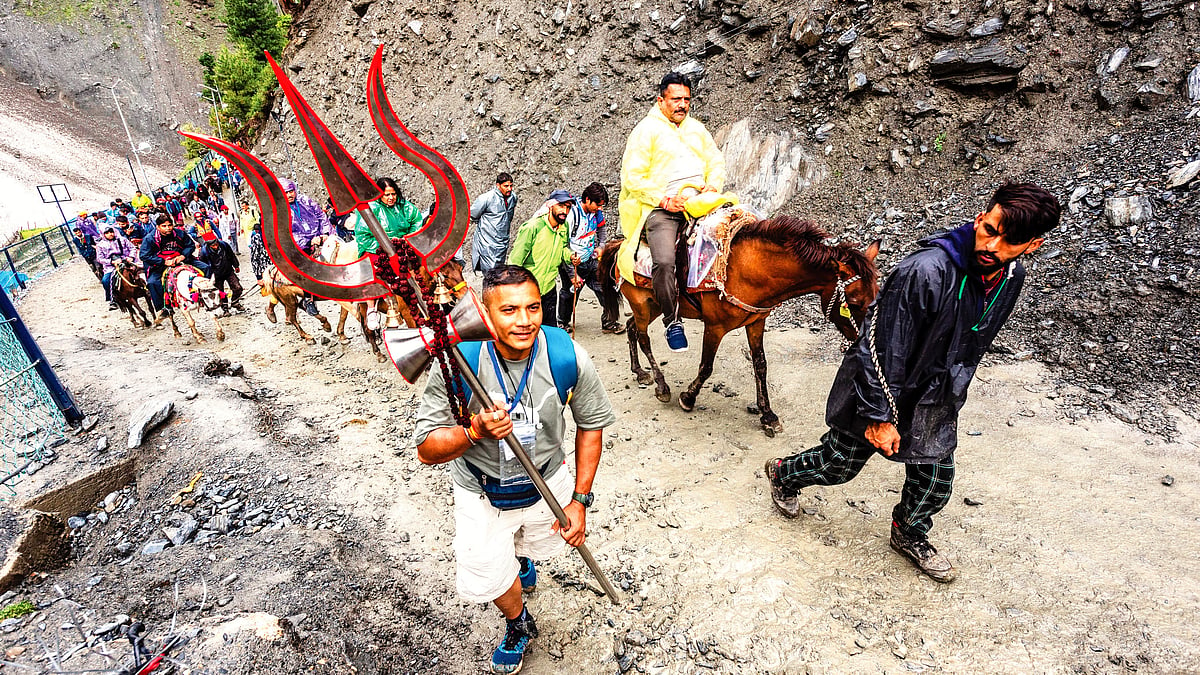
The annual Amarnath Yatra, a major Hindu pilgrimage in Kashmir, has started with a troubling sign. The naturally formed ice lingam inside the cave has melted by nearly 90 percent just days into the 57-day event. This early melting is a clear warning about the combined effects of climate change and heavy human activity on a fragile Himalayan ecosystem.
Main Impact
The rapid melting of the ice lingam is not just a religious concern. It signals that rising temperatures and large crowds are damaging one of India's most sensitive mountain environments. The pilgrimage, which supports thousands of local families, now faces a serious challenge: how to balance faith with ecological protection.
Key Details
What Happened
The Amarnath Yatra began on July 3, 2026. By the fifth day, over 113,800 pilgrims had visited the cave. At the same time, reports showed that the ice lingam had shrunk to barely one foot in height. This ice formation is not man-made. It forms naturally when water droplets freeze inside the cave under cold conditions.
Important Numbers and Facts
Kashmir saw unusually high temperatures in May and June 2026, breaking several records. Less snowfall than normal during the previous winter also reduced natural cooling around the cave. Similar problems occurred in 2024 and 2025, showing a clear pattern of climate instability in the region.
Background and Context
The Himalayas are among the world's most climate-sensitive mountain systems. Rising temperatures are causing glaciers to melt faster and changing snowfall patterns. The Amarnath cave sits in an ecologically sensitive zone, but there is very little long-term climate data collected directly from the site. Most information comes from nearby weather stations in Srinagar, Pahalgam, and Anantnag.
Public or Industry Reaction
Environmental experts have repeatedly called for limiting the number of daily pilgrims to protect the cave's microclimate. They also recommend reducing mechanized activity, vehicle movement, and construction near the site. The melting ice lingam has sparked wider discussion about how to manage the pilgrimage in a way that respects both faith and nature.
What This Means Going Forward
The situation raises an important question: can religious practices adapt to protect the environment they depend on? Experts say that future infrastructure development must be guided by ecological needs, not just logistics. Climate adaptation should become a key part of pilgrimage planning, especially in sensitive Himalayan areas. Without changes, the ice lingam may not survive for future generations.
Final Take
The Amarnath cave is a reminder that humans are not masters of nature but its caretakers. Devotion should not destroy the very thing it celebrates. Managing the annual pilgrimage must go beyond administration. It needs to be part of a larger national effort for climate resilience and environmental care in the Himalayas.
Frequently Asked Questions
Why did the Amarnath ice lingam melt so quickly this year?
The ice lingam melted early because of two main reasons. First, Kashmir experienced record-high temperatures in May and June. Second, there was less snowfall than normal during the previous winter, which reduced natural cooling around the cave. These conditions made it hard for the ice formation to survive.
How does human activity affect the ice lingam?
Every person inside the cave gives off about 100 watts of body heat. When tens of thousands of pilgrims visit in a short time, the temperature and humidity inside the cave rise. This extra heat speeds up the melting of the ice lingam. Vehicle movement and construction near the site also add to the problem.
What can be done to protect the Amarnath ice lingam?
Experts suggest limiting the number of daily pilgrims to keep the cave's environment stable. They also recommend reducing mechanized activity and building infrastructure based on ecological needs, not just convenience. Long-term climate monitoring at the cave site is also needed to better understand and manage the risks.