Summary
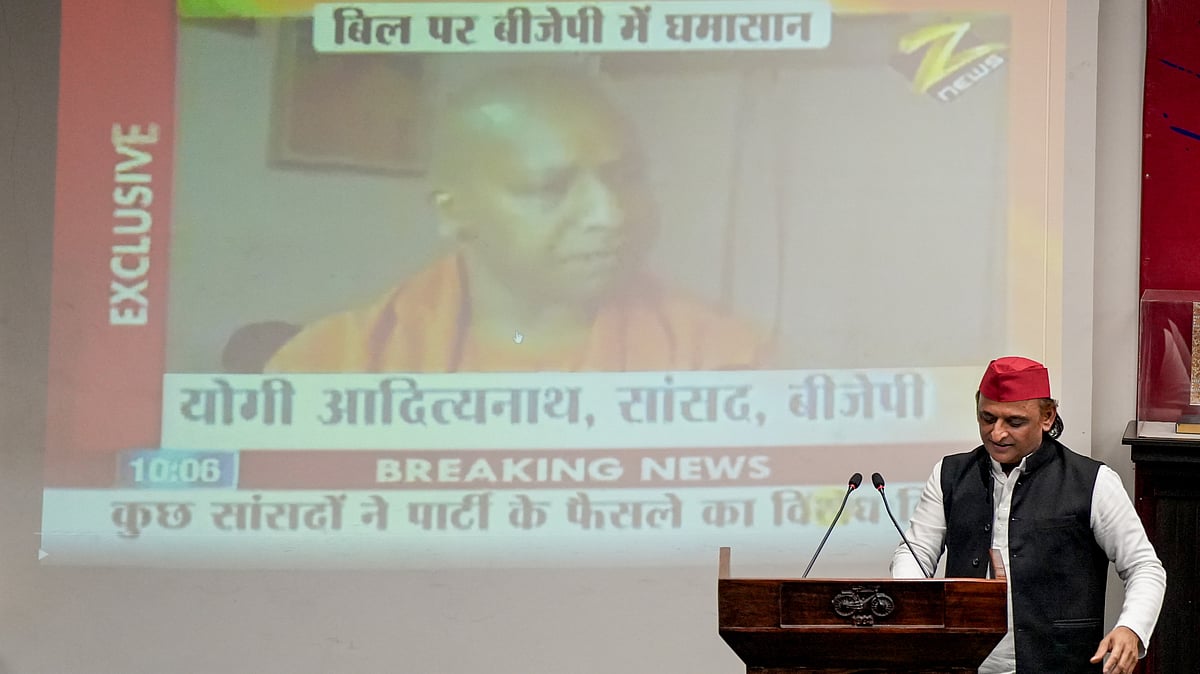
Samajwadi Party leader Akhilesh Yadav recently criticized Uttar Pradesh Chief Minister Yogi Adityanath over a political march held in Lucknow. Yadav claimed that the BJP is practicing how to act as an opposition party because they expect to lose the next election. The dispute centers around a failed bill regarding women’s reservation and the upcoming political strategy for the state. This exchange highlights the sharpening divide between the ruling party and the opposition as they prepare for future polls.
Main Impact
The main impact of this statement is the framing of the BJP as a party in decline. By calling a government-led protest a "rehearsal" for being in the opposition, Akhilesh Yadav is trying to shift the public mood. He suggests that the current government has lost its grip on power and is now forced to use street protests to hide its legislative failures. This rhetoric aims to energize the Samajwadi Party’s supporters and build momentum for the 2027 state elections.
Key Details
What Happened
On Tuesday, Chief Minister Yogi Adityanath led a march called the ‘Jan Aakrosh Mahila Padyatra.’ The walk started at the Chief Minister’s official home and ended at the Uttar Pradesh state assembly. The purpose of the march was to protest the failure of the Constitution (131st Amendment) Bill. This bill was meant to reserve seats for women and increase the total number of seats in the Lok Sabha. Akhilesh Yadav held a press conference shortly after to mock the event, stating that it is rare to see a ruling government protest against the failure of its own proposed laws.
Important Numbers and Facts
The event took place on April 21, 2026. The central focus was the 131st Amendment Bill, which has become a major point of conflict between the BJP and the INDIA bloc. Yadav described the defeat of this bill as a "historic victory" for democracy. He also promoted his "PDA" formula, which stands for Pichhda (Backward Classes), Dalit, and Alpsankhyak (Minorities). He believes this group of voters will be the key to defeating the BJP in the next major election cycle.
Background and Context
To understand this conflict, it is important to look at the history of women’s reservation in India. For many years, political parties have debated how to give women more seats in parliament and state assemblies. While most parties say they support the idea, they often disagree on the details. Some parties, like the Samajwadi Party, want specific quotas within that reservation for women from backward classes and minority groups. The failure of the recent bill shows that these disagreements are still very strong.
Additionally, the demand for a caste census has become a major political issue. A caste census is a process where the government counts people based on their specific caste groups. The opposition believes this data is necessary to ensure that government benefits and jobs are distributed fairly. The BJP has been hesitant to conduct such a census, which the opposition uses as a tool to claim the government is against social justice.
Public or Industry Reaction
The reaction to Yadav’s comments has been split along party lines. Supporters of the Samajwadi Party praised his sharp wit and his focus on the PDA alliance. They see his comments as a sign of a confident opposition that is ready to take over. On the other hand, BJP supporters argue that the march was a necessary way to show the public who was responsible for blocking a bill meant to empower women. Political analysts note that this back-and-forth is typical for Uttar Pradesh, where political battles are often fought through large public demonstrations and strong verbal attacks.
What This Means Going Forward
Looking ahead, the political climate in Uttar Pradesh is likely to become even more intense. The Samajwadi Party is clearly building a foundation based on social justice and the representation of marginalized groups. By focusing on the PDA strategy, they hope to create a large enough voting bloc to challenge the BJP’s dominance. We can expect more debates over the caste census and the specific rules for women’s reservation in the coming months.
For the BJP, the challenge will be to prove that they can still pass major laws despite opposition. If they continue to hold protests while in power, it may give more weight to Yadav’s claim that they are acting like an opposition party. The next few years will show whether the BJP can regain its legislative momentum or if the Samajwadi Party’s alliance will successfully change the political direction of the state.
Final Take
The exchange between Akhilesh Yadav and Yogi Adityanath is more than just a simple political argument. It represents two very different visions for the future of India’s most populous state. One side is focusing on traditional power and large-scale protests, while the other is trying to unite various social groups under a single banner of social justice. As the 2027 elections draw closer, these strategies will be tested by the voters, who will ultimately decide which path the state should take.
Frequently Asked Questions
What is the PDA formula mentioned by Akhilesh Yadav?
PDA stands for Pichhda (Backward Classes), Dalit, and Alpsankhyak (Minorities). It is a political strategy used by the Samajwadi Party to unite these three groups into a single voting bloc to challenge the BJP.
Why was the BJP protesting while they are in power?
The BJP led a march to protest the defeat of the 131st Amendment Bill. They wanted to show the public that the opposition was responsible for stopping a law that would have increased women's representation in government.
What is a caste census and why is it controversial?
A caste census is a government survey to count people by their caste. It is controversial because some believe it is necessary for fair resource distribution, while others fear it could lead to more social division and identity politics.