
Summary
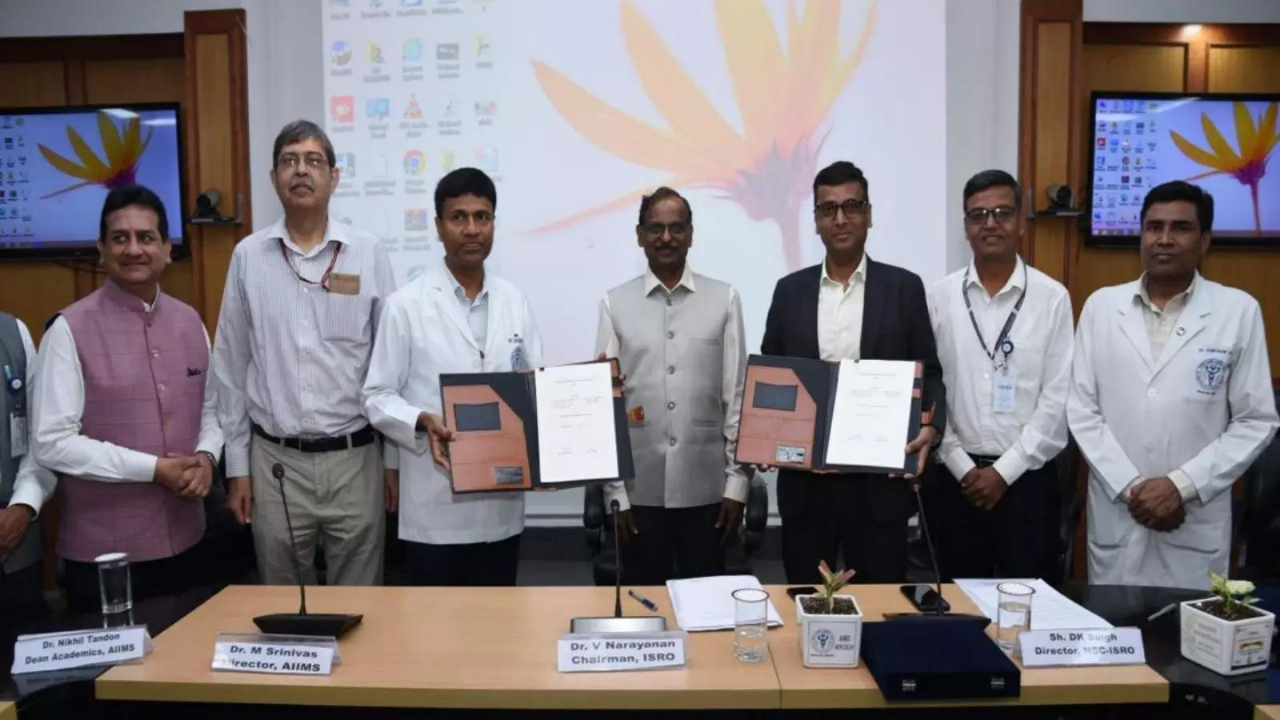
The All India Institute of Medical Sciences (AIIMS) in New Delhi and the Indian Space Research Organisation (ISRO) have officially joined forces. They signed a special agreement to work together on space medicine research. This partnership is a major step for India as it prepares to send humans into space through the Gaganyaan mission. The goal is to study how space travel affects the human body and to find ways to keep astronauts healthy during their journeys.
Main Impact
This collaboration brings together the best medical experts and the best space scientists in India. The main impact is that India will now have its own dedicated research into space health. Instead of relying only on data from other countries, Indian doctors can now develop specific medical plans for Indian astronauts. This will make space travel safer and help India become a leader in the field of space medicine. It also means that the technology developed for space could eventually be used to help patients on Earth, especially those in remote areas.
Key Details
What Happened
AIIMS and ISRO signed a Memorandum of Understanding (MoU) to create a framework for their partnership. Under this deal, AIIMS will help ISRO by providing medical expertise. They will look at how microgravity, or the lack of gravity, changes the way the heart, bones, and muscles work. They will also work on creating medical kits that are small and light enough to be carried on a spacecraft but powerful enough to handle emergencies.
Important Numbers and Facts
The Gaganyaan mission is India's first human spaceflight program. It aims to send a crew of three members into an orbit 400 kilometers above the Earth. The mission is expected to last for about three days before the crew returns safely to land in Indian sea waters. To prepare for this, ISRO needs to ensure that the astronauts can handle the physical stress of the trip. AIIMS will play a key role in monitoring the health of these astronauts before, during, and after their flight. The research will also focus on long-term missions, as India plans to build its own space station in the coming years.
Background and Context
Space is a very difficult place for the human body to survive. On Earth, gravity keeps our bones strong and helps our blood flow normally. In space, the lack of gravity causes muscles to become weak because they do not have to work as hard. Bones can lose density, making them fragile. There is also the problem of space radiation, which can increase the risk of serious illnesses. Furthermore, being in a small, closed space for a long time can affect an astronaut's mental health.
India has been making great progress in space exploration with successful missions to the Moon and Mars. However, sending humans is much more complicated than sending robots. It requires a deep understanding of biology and medicine. By involving AIIMS, which is India's top medical institute, ISRO is ensuring that the medical side of the mission is handled by the best professionals in the country.
Public or Industry Reaction
The medical and scientific communities have welcomed this news with great excitement. Experts believe that this is a natural and necessary step for any country with serious space goals. Doctors at AIIMS have expressed their readiness to take on this new challenge. They see it as a chance to expand medical science into a new area. Industry leaders also believe that this partnership will lead to new inventions in medical technology. For example, sensors that monitor an astronaut's heart rate from space could be used to monitor patients in rural Indian villages through telemedicine.
What This Means Going Forward
In the coming months, we can expect to see more joint projects between these two organizations. They will likely set up specialized labs to simulate space conditions. Doctors will work on special diets for astronauts and exercise routines to prevent muscle loss. This partnership is not just for one mission. It is a long-term plan to build a strong foundation for human spaceflight in India. As India looks toward more ambitious goals, like landing a person on the Moon, the medical data gathered by AIIMS and ISRO will be vital. It will help scientists understand if humans can live and work in space for months at a time.
Final Take
The tie-up between AIIMS and ISRO is a perfect match of science and medicine. It shows that India is thinking carefully about every detail of its space missions. By focusing on the health and safety of its astronauts, India is proving that it is ready to take its place among the top space-faring nations. This partnership ensures that while our astronauts reach for the stars, their well-being remains firmly protected by the best medical care available.
Frequently Asked Questions
Why do ISRO and AIIMS need to work together?
ISRO builds the rockets and spacecraft, but AIIMS provides the medical knowledge needed to keep astronauts healthy in the harsh environment of space, where there is no gravity and high radiation.
What is the Gaganyaan mission?
Gaganyaan is India's first mission to send human beings into space. It plans to send three astronauts into Earth's orbit for a few days to demonstrate India's ability to conduct human spaceflight.
How does space travel affect the human body?
Space travel can cause muscles to weaken, bones to lose strength, and fluids in the body to shift toward the head. It can also expose astronauts to harmful radiation and cause stress due to isolation.



