Summary
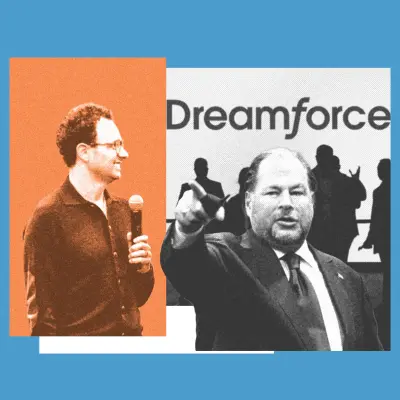
Bret Taylor, the co-founder of the AI startup Sierra and a former leader at Salesforce and Facebook, believes the way we use technology is changing. He argues that the days of clicking buttons and navigating complex menus are coming to an end. Instead, he predicts that artificial intelligence agents will take over these tasks, allowing people to interact with software using simple language. This change could make technology much easier to use for everyone and transform how businesses operate.
Main Impact
The biggest impact of this shift is the removal of the learning curve for new software. For decades, users have had to learn where buttons are located and how different programs work. Taylor suggests that AI agents will flip this relationship. Instead of humans learning how to talk to computers, computers will finally understand how to talk to humans. This will likely lead to a massive change in the software industry, as companies move away from building visual dashboards and start focusing on conversational tools that can perform real-world tasks.
Key Details
What Happened
Bret Taylor has been sharing his vision for the future of software through his new company, Sierra. He explains that traditional software is often too hard to use because it requires people to act like computers. We have to click specific sequences of buttons to get a result. Taylor believes that AI agents—which are programs that can think, plan, and take action—will replace these manual steps. In his view, the "user interface" of the future is simply a conversation. You tell the AI what you want to achieve, and the AI handles the clicks, searches, and data entry behind the scenes.
Important Numbers and Facts
Bret Taylor is a highly respected figure in the tech world. He was the co-CEO of Salesforce and the Chief Technology Officer at Facebook. He also helped create Google Maps. His new company, Sierra, recently raised $110 million from investors, valuing the startup at over $1 billion. This shows that big investors believe in his vision. Additionally, Taylor serves as the chairman of the board at OpenAI, the company that created ChatGPT. His deep involvement in these major companies gives his predictions a lot of weight in the industry.
Background and Context
To understand why this matters, it helps to look at how computers have changed over time. In the beginning, people had to type code to make a computer do anything. Later, we got "graphical user interfaces," which are the icons, windows, and buttons we use today. While buttons were a big improvement over typing code, they still require a lot of work from the user. You have to find the right menu, click the right tab, and fill out the right form.
AI agents are the next step in this evolution. Unlike a basic chatbot that just answers questions, an agent can actually do things. For example, instead of you logging into a travel website, clicking through dates, and selecting a seat, an AI agent could do all of that for you after you say, "Book me a window seat on a flight to New York next Tuesday." This removes the need for the website's buttons entirely.
Public or Industry Reaction
The tech industry is currently divided on how fast this change will happen. Many software developers are excited because they can build tools that are more powerful and personal. Business leaders are also interested because AI agents can handle customer service and basic office work much faster than current systems. However, there are also concerns. Some experts worry about the accuracy of AI agents, fearing they might make mistakes when performing tasks like moving money or booking services. There is also a big discussion about jobs, as AI agents could eventually do the work that many office employees and customer support staff do today.
What This Means Going Forward
In the coming years, we will likely see fewer new apps with complicated screens full of buttons. Instead, we will see more "invisible" software that works through voice or text. Companies will need to rethink how they build their products. They will focus on making sure their data is organized so that AI agents can read it and act on it. For the average person, this means technology will become more accessible. People who struggle with computers today might find it much easier to get things done when they can just speak to their devices.
However, this transition will take time. Security and privacy will be the biggest hurdles. For an AI agent to be truly useful, it needs access to your personal information and your accounts. Building systems that people can trust with that level of access is the next major challenge for companies like Sierra and OpenAI.
Final Take
The move away from buttons marks a major turning point in how humans interact with machines. Bret Taylor’s vision suggests a future where technology is no longer a tool we have to master, but a partner that understands our needs. While the technology is still in its early stages, the shift toward AI agents is already changing how the world's biggest companies think about the future of work and communication.
Frequently Asked Questions
What is an AI agent?
An AI agent is a type of software that can understand a goal, create a plan to reach that goal, and take actions across different programs to finish the task without a human clicking every button.
Who is Bret Taylor?
Bret Taylor is a famous tech executive who helped create Google Maps and served as the co-CEO of Salesforce. He is currently the chairman of OpenAI and the co-founder of a new AI company called Sierra.
Will buttons disappear from all apps?
Probably not all at once. While AI agents will handle many tasks, some complex jobs like photo editing or gaming may still use buttons and menus for a long time. However, for everyday tasks like shopping or scheduling, buttons will likely become less common.