
Summary
The Bharatiya Janata Party (BJP) has started the process of choosing candidates for the upcoming Ahmedabad Municipal Corporation elections. On April 2 and 3, party leaders held meetings to hear from people who want to run for office. This "sense process" helps the party decide who has the best chance of winning in different parts of the city. Many people, including former city leaders and their children, have come forward to ask for a chance to represent their wards.
Main Impact
This selection process is the first major step toward the local elections in Gujarat. It shows how much competition exists within the party. By listening to local workers and leaders, the BJP aims to pick candidates who are popular with the public. The high number of people asking for tickets shows that many are eager to enter local politics. This process also highlights how family members of past leaders are trying to stay active in the city's government.
Key Details
What Happened
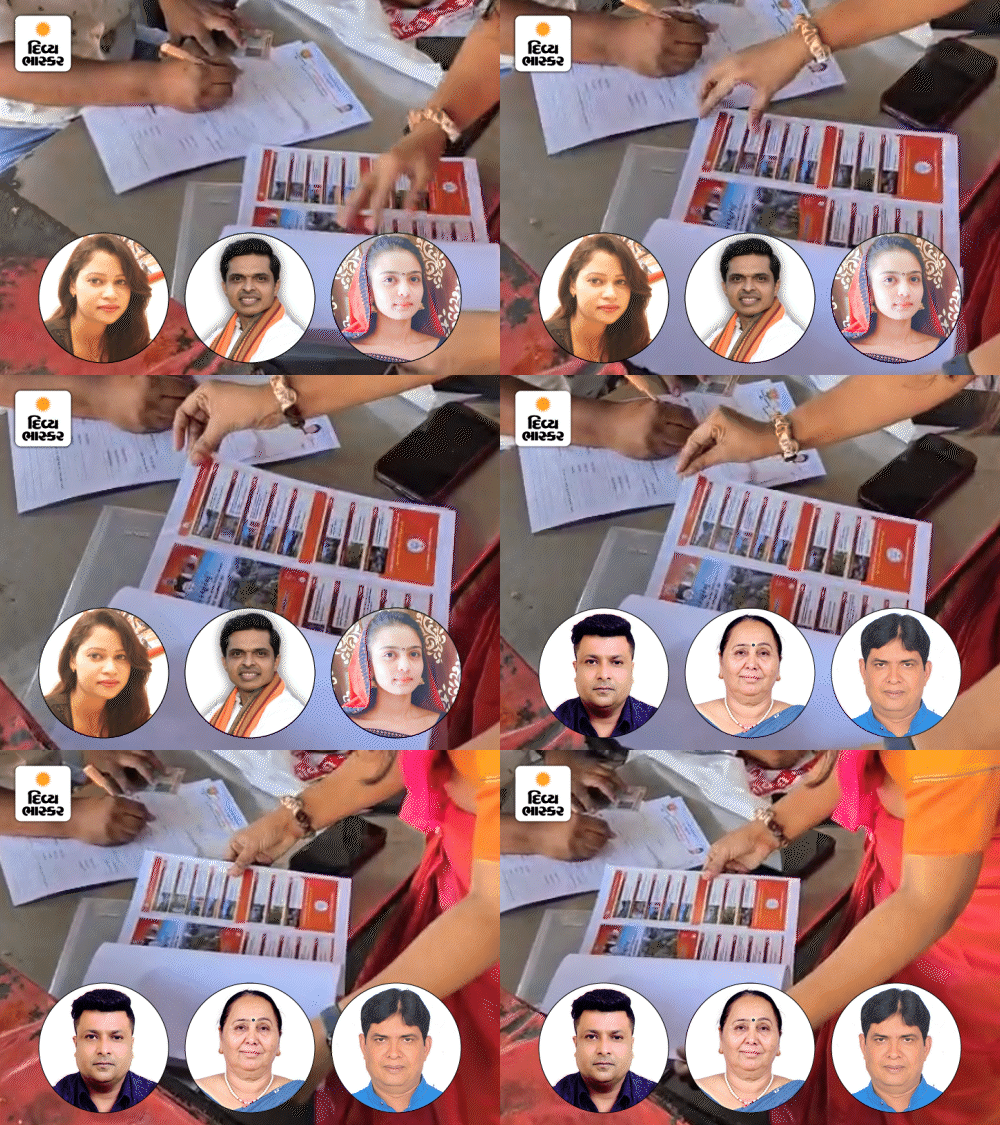
The BJP organized a two-day event in Ahmedabad to meet with potential candidates. On the first day, they focused on 24 different wards across the city. More than 70 people officially shared their names as interested candidates. These individuals include former corporators, city-level party officers, and ward-level leaders. The party observers listened to their reasons for running and checked their support among local workers.
Important Numbers and Facts
The selection process covered several major areas of Ahmedabad. These include Ranip, Chandkheda, Jodhpur, Sarkhej, Vejalpur, and Amraiwadi. Other areas like Shahibaug, Navrangpura, and Nikol were also part of the first day. A very interesting situation developed in the Sarkhej ward. Even though one seat there is a "general" seat, 65 people from the Scheduled Caste (SC) community asked for the ticket. This is because there are about 19,000 SC voters in that specific area.
Background and Context
Local elections are very important because corporators handle daily issues like roads, water, and street lights. In Gujarat, the BJP uses a "sense process" to pick candidates. Instead of just choosing names from the top, they send observers to talk to local members. This helps the party understand who is liked by the people. Sometimes, rules about "rotation" mean that a person cannot run in the same ward they represented before. This year, many former leaders who were affected by these rules are now asking for their children or family members to be given a chance instead.
Public or Industry Reaction
There is a lot of talk about the demand from the SC community in the Sarkhej ward. In the past, the Congress party gave a ticket to a candidate from this community for a general seat, and she received over 10,000 votes. Now, many people in the BJP feel that the party should also give a chance to an SC candidate for that general seat. This shows that voters and local leaders are looking for better representation based on the population of their neighborhoods. The list of names for Sarkhej includes doctors and young professionals, showing a shift toward educated candidates.
What This Means Going Forward
After these two days of meetings, the observers will take the list of names to the senior party leaders. The state-level committee will then make the final decision on who gets to run for each seat. The party will look for a mix of experienced leaders and new faces. The high interest from the children of former leaders suggests that "family politics" will continue to be a topic of discussion. The final list of candidates will likely be announced in the coming weeks as the election date gets closer.
Final Take
The race for a spot in the Ahmedabad Municipal Corporation is becoming very competitive. With hundreds of people wanting to serve as corporators, the BJP has a difficult task in choosing the right names. The strong demand from different communities and the entry of younger family members of old leaders show that local politics in Ahmedabad is changing. The final choices will determine how the city is managed for the next few years.
Frequently Asked Questions
What is the "sense process" in these elections?
It is a method where party leaders visit local areas to listen to workers and potential candidates. This helps the party decide who is the most popular and capable person to run for a seat.
Why are so many people from the SC community asking for a ticket in Sarkhej?
The Sarkhej ward has a large population of about 19,000 SC voters. Because of this, 65 candidates from that community believe they should represent the area, even on a seat that is open to everyone.
Can former corporators run for election again?
Yes, many former corporators have asked to run again. However, some cannot run in their old wards because of "rotation" rules that change which seats are reserved for women or specific communities.



