
Summary
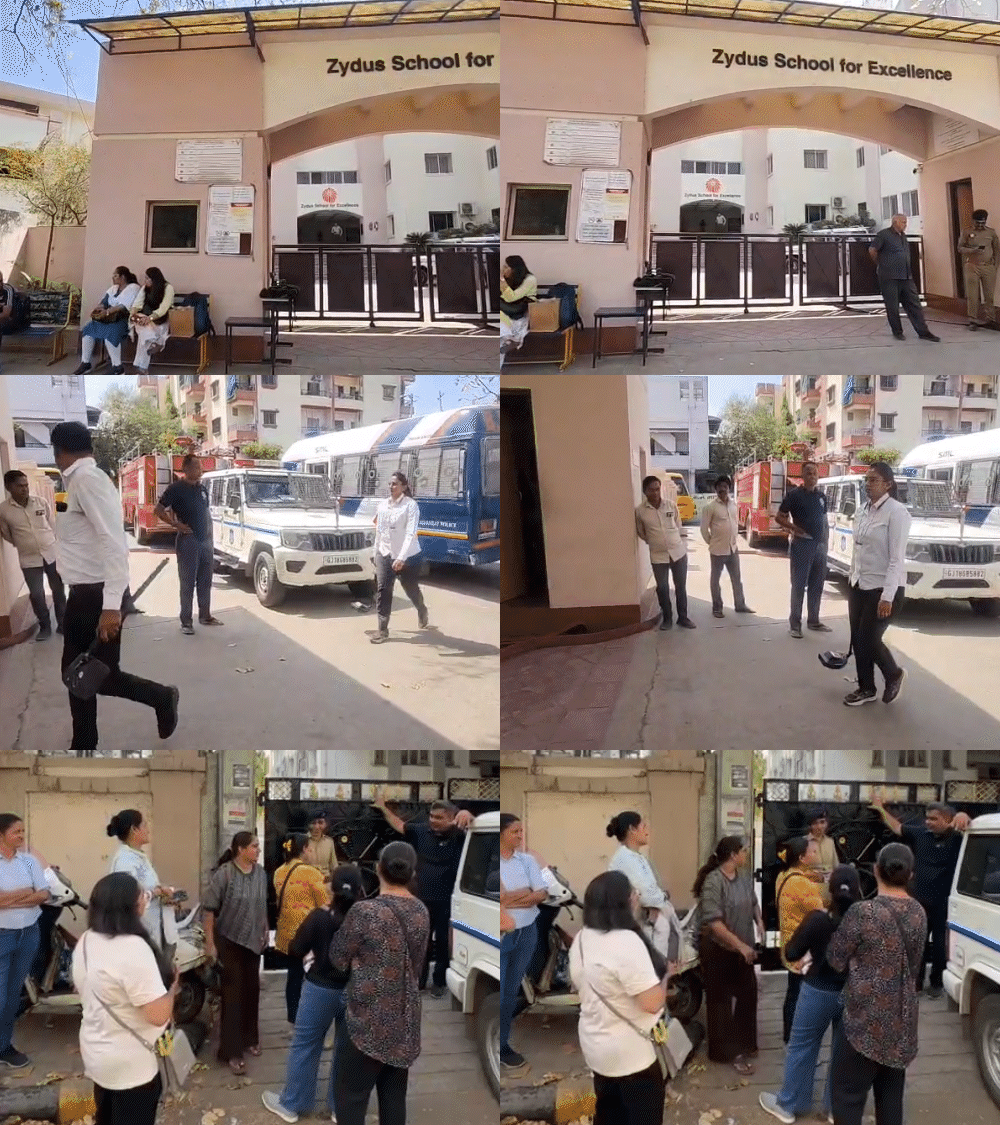
On March 18, 2026, several schools in Ahmedabad and the Gujarat Legislative Assembly received threatening emails claiming that bombs had been planted on their premises. A total of 23 schools were targeted on the final day of the state board exams. The emails caused a major scare, leading to a one-hour delay in exams as police and bomb squads searched the buildings. No explosives were found, and authorities believe the messages were sent to create fear and disrupt public order.
Main Impact
The primary impact of these threats was the disruption of the Gujarat Board exams. Students appearing for the Class 10 Social Science paper and the Class 12 History paper faced significant stress. Parents rushed to schools in a state of panic to check on their children. Beyond the schools, the threat to the Vithalbhai Patel Bhavan (the Legislative Assembly) put the entire state administration on high alert. Police resources, including dog squads and cybercrime units, had to be deployed immediately across multiple locations.
Key Details
What Happened
The threat arrived via email on Wednesday morning. The sender claimed that "Gujarat will speak Khalistan" and warned of IED (Improvised Explosive Device) blasts. The email stated that bombs would go off in Ahmedabad schools at 1:11 PM and at the Legislative Assembly in Gandhinagar at 2:11 PM. The message specifically mentioned high-profile leaders, including Prime Minister Narendra Modi, Home Minister Amit Shah, and Chief Minister Bhupendra Patel. It demanded support for a Khalistan referendum and threatened to blow up the Patel Bhavan if the demands were not met.
Important Numbers and Facts
A total of 23 schools were affected, including 19 schools within Ahmedabad city and 4 in the surrounding rural areas. This is not the first time such an incident has occurred. On February 16, 2026, 40 schools in Ahmedabad and Vadodara received similar threats. On February 17, several courts in Gujarat were targeted. Earlier, on January 23, 15 schools, including an Army school, were threatened. In December 2025, 26 schools in the Gandhinagar and Kalol areas also received bomb threats via email.
Background and Context
These repeated threats are seen as a form of "cyber warfare" or psychological attacks. The goal is not necessarily to cause a physical explosion but to create a sense of terror and test how quickly the government responds. Cybercriminals often use special tools to hide their identity. They use services like ProtonMail or temporary email accounts that do not require real names. They also use Virtual Private Networks (VPNs) and Tor browsers to hide their IP address. An IP address is like a digital home address for a computer; by hiding it, criminals make it very hard for the police to see where the email actually came from.
Public or Industry Reaction
The reaction from parents was one of deep concern and anger. Many parents criticized the timing of the threats, as they targeted children during important exams. School authorities followed safety protocols and worked closely with the police to evacuate or secure the buildings. The police cyber unit is currently analyzing the "email headers," which contain hidden data about the path the email took. They are also working with international agencies like Interpol and private email providers to track the digital footprints left by the sender.
What This Means Going Forward
The government and police are likely to increase security measures for schools and public buildings. Since these threats have become frequent, authorities are refining their Standard Operating Procedures (SOPs) to handle such situations without causing mass panic. The cybercrime department is focusing on digital forensics to find any mistakes made by the sender, such as using the same IP address twice. There is also a push for better international cooperation to catch criminals who send these emails from outside the country.
Final Take
While the bomb threats turned out to be a hoax, they highlight the growing challenge of digital threats. Protecting schools and public institutions now requires both physical security and strong cyber defenses. The focus remains on finding the individuals responsible to prevent these repeated disruptions to the lives of students and the general public.
Frequently Asked Questions
Were any actual bombs found in the schools?
No. After thorough searches by the police and dog squads, no explosives or suspicious items were found in any of the 23 schools or the Legislative Assembly.
How did the threats affect the board exams?
The exams were delayed by about one hour. Once the police cleared the buildings and confirmed they were safe, the students were allowed to continue their papers.
How is the police trying to catch the person who sent the emails?
The cybercrime unit is analyzing the email data and working with internet service providers. They are also looking for digital clues that might reveal the sender's true location, even if they used a VPN to hide it.



