
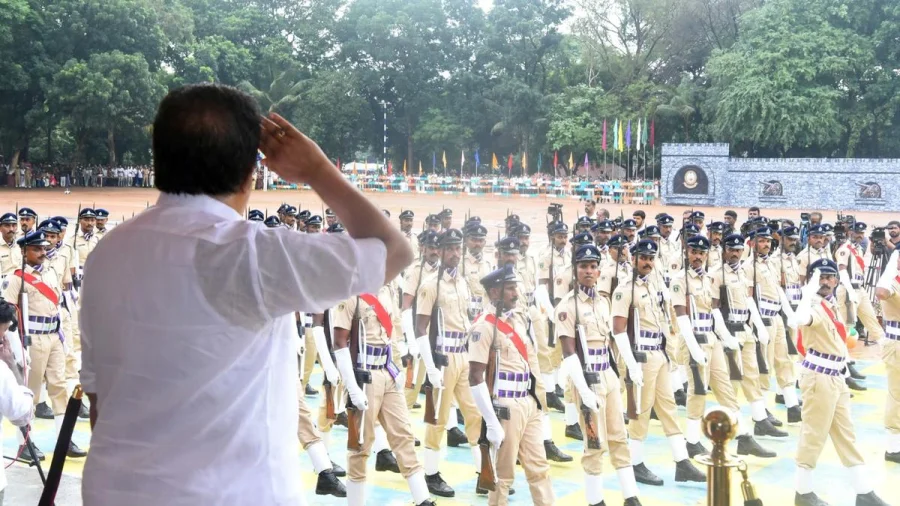
The parade ground at Muttikulangara became the site of a major milestone: 347 police recruits officially passed out and joined the force. For the new personnel, the ceremony marked the end of one rigorous phase and the beginning of a public service career filled with responsibility.
A Milestone Induction at Muttikulangara
The passing out ceremony brought together recruits from different wings of the police establishment. According to the original report, the intake consisted of 127 recruits from KAP First Battalion, 110 from KAP Second Battalion, and 110 police drivers from the India Reserve Battalion.
Adding the three numbers gives exactly 347, confirming the total reported in the headline. This was not merely a ceremonial gathering — it was a formal administrative confirmation that these recruits had completed their training.
The Numbers Behind the Passing Out Parade
Breakdown of the 347 recruits:
• KAP First Battalion — 127 recruits
• KAP Second Battalion — 110 recruits
• India Reserve Battalion Police Drivers — 110 recruits
The inclusion of 110 police drivers in the same batch is particularly significant. Police transport and rapid response units depend on trained drivers, and this induction directly strengthens that operational area.
Why This Induction Strengthens Police Ranks
A passing out parade is not just about drill and ceremony. It formally converts trainees into personnel who can be deployed in law-and-order duties, patrolling, and emergency response.
With two armed police battalions represented in the batch, the force gains a fresh pool of disciplined manpower. With the driver contingent, it also gains mobility — a factor that often decides how quickly police reach a crime scene or accident site.
The Recruits and Their Units
The report identifies three clear segments among the recruits. KAP First Battalion and KAP Second Battalion are the two largest groups. The third group is made up entirely of police drivers from the India Reserve Battalion.
The available information does not specify the duration of their training, the names of officers who reviewed the parade, or the exact institution where the ceremony was held. Only the location and the numbers have been confirmed.
What a Passing Out Ceremony Means for the New Personnel
For the recruits themselves, the ceremony carries lasting personal weight. It is the moment they officially shed the title of trainee and take on the identity of a police officer in service. Family members and friends watching such a parade often see months or years of discipline, physical training, and sacrifice reach a meaningful conclusion.
For the public, the ceremony is a reminder that the police force is constantly replenishing its ranks with trained people — including those responsible for driving official vehicles under pressure.
No Official Comments Released Yet
As of now, the original report does not include any direct quote from a police officer, training official, or administrative authority. It also does not name the reviewing officer or mention whether a formal address was delivered.
Until an official statement is released, details such as the ceremony date, venue specifics, and any messages from top officials should be treated as unconfirmed.
What the Ceremony Signals for Police Preparedness
Bringing armed battalion recruits and police drivers into service through a single passing out parade suggests a coordinated induction process. The mix of roles is practical: a police force needs both personnel and the transport capacity to move them quickly.
The presence of drivers from the India Reserve Battalion also shows that operational mobility is being treated as a core requirement, not an afterthought.
Confirmed Facts vs What Remains Unclear
Confirmed: 347 police recruits passed out at Muttikulangara. The batch included 127 from KAP First Battalion, 110 from KAP Second Battalion, and 110 police drivers from the India Reserve Battalion.
Unclear: The exact date of the ceremony, the full name and district location of the parade venue, the training duration, and the posting orders were not provided. No official quote or senior officer's comment has been verified.
All additional claims about this event should be treated as speculation until a formal police statement is released.
Concerns and the Need for a Balanced View
A passing out parade confirms that training has been completed, but it does not, by itself, guarantee operational readiness. Effective policing depends on several factors that follow the ceremony: clear postings, experienced supervisors, adequate vehicles, equipment, and field support.
For the 110 police drivers, the next challenge will be deployment to units where their driving skills can be put to real use. Without clarity on postings, the practical impact of this induction cannot be fully assessed.
A Wider Pattern: Recruitments That Mix Combat and Mobility
This batch is notable because it combines personnel from armed police battalions with a dedicated group of drivers in a single ceremony. The structure of the intake suggests an attempt to address two needs at once — combat-ready manpower and operational mobility.
If similar combined inductions become more common, it could point to a broader shift in how police forces plan their human resources.
What Families and the Public Should Keep in Mind
For families of the recruits, the parade is the official confirmation that their training is complete. The next step is the posting order, which is normally communicated through official channels.
Members of the public should rely only on official police communications for details about this batch. Unverified social media posts about transfers, postings, or ceremony photographs should not be treated as authoritative.
Future Outlook
With 347 personnel now formally inducted, the focus shifts to their administrative placement within the respective units. If the police department releases posting details or photographs from the ceremony, a clearer picture will emerge.
Until then, the confirmed headline remains the strongest piece of information: 347 recruits have passed out, and the force has grown by that exact number.
Our Take
The passing out of 347 police recruits at Muttikulangara is a reminder of the scale at which police forces rebuild their strength. The documented breakdown — 127 from KAP First Battalion, 110 from KAP Second Battalion, and 110 police drivers — makes the induction more than a simple headcount.
The driver component is the most operationally interesting part. Police response times, night patrols, and emergency movement all depend on trained drivers. A batch that includes 110 of them is investing in mobility as seriously as it is investing in numbers.
But numbers alone are not capability. How these 347 personnel are deployed, supervised, and supported will determine whether this ceremony translates into better policing on the ground.
Frequently Asked Questions
How many police recruits passed out at Muttikulangara?
A total of 347 police recruits passed out at Muttikulangara, according to the original report. The number is confirmed by adding the three groups mentioned: 127, 110, and 110.
What was the breakdown of the 347 recruits?
The batch included 127 recruits from KAP First Battalion, 110 recruits from KAP Second Battalion, and 110 police drivers from the India Reserve Battalion.
What is a passing out parade in the police force?
A passing out parade is a formal ceremony held after the completion of training. It marks the moment when recruits are officially inducted as police personnel and become eligible for deployment.
Where is Muttikulangara?
The available report does not specify the district or full location of Muttikulangara. The name appears in the source material without additional geographic details.



